 1
1


 Facebook
 X
X
 WhatsApp
 Email
Email

Your clothes have been on the drying rack for two days. They're not drying.The wooden door to your balcony has started sticking in its frame. You open the wardrobe or the shoe-cabinet, there's that damp, closed-in smell.The air in every room feels heavy. Welcome to monsoon season in India, where the rain is glorious and the inside of your home is slowly becoming a humidity experiment.
Most of us reach for the AC in May or June, when the heat is at its most brutal. But here's what you need to know: the months when your air conditioner earns its place aren't just the hot ones. They're also the wet, grey ones, when the temperature may have dropped but the humidity doesn’t.
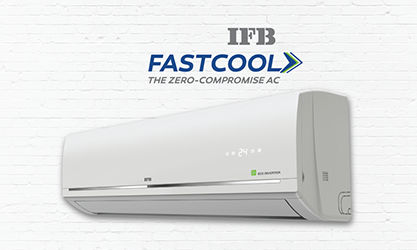
Understanding what your AC actually does during monsoon changes how you use it. And once you understand what IFB FastCool ACs are built to handle in exactly this kind of weather, you'll wonder why you ever switched it off when the rains arrived.
What Monsoon Actually Does to a Home
It shows up everywhere. In the furniture, the damp patches on the walls, the thin film of rust on taps and hinges, and the heavy air that won't lift.
There is a second, quieter layer underneath it all. Warm, moisture-laden air is exactly the environment mould spores, bacteria, fungi, and allergens thrive in. These do not sit politely on a damp wall waiting to be noticed. They move through the air you are breathing, all day. A damp towel is easy to spot and deal with. Air carrying mould spores, bacteria, and allergens is not, and most of us never connect this to our health, to how we've been feeling all season.
With windows closed and humidity trapped inside, the air in a sealed-up home during monsoon can be considerably more polluted than the air outside. Nothing about the home needs to be dirty for this to happen. It is simply what monsoon does to air over weeks of being shut in. Managing both the moisture and the air quality it degrades is what an IFB air conditioner running through the season is actually doing.
7-Stage Air Treatment: Cleaning the Air Monsoon Has Already Compromised
Cooling the room and drawing out the moisture is half the job. The other half, dealing with the mould spores, bacteria, fungi, and allergens that humid air has already loaded into circulation, is where most monsoon advice stops short.
The 7-Stage Air Treatment in IFB ACs was built for exactly this. It is a layered filtration system, not a single filter doing one thing. The Dust Filter prevents allergies by capturing dust and airborne particles before they settle. The PM 0.3 filter catches particles as small as 0.3 micron, fine enough to pull mould spores out of circulation that ordinary filtration lets straight through. The Anti-Bacterial filter removes bacteria and allergens. The Activated Carbon filter absorbs the musty, damp odour that monsoon air carries into every corner of the home, the smell a freshener covers up rather than removes from the air itself. The Catechin filter keeps improving air quality as the system runs, and where fitted, the Vitamin C Diffuser adds natural antioxidants back into the air. The Aroma Diffuser goes further—it doesn't just mask. It infuses your space with a genuine scent, floral or ocean fresh, so the air actually feels fresh.
The distinction is worth being clear about: dehumidification, through the AC's cooling and dry functions, controls the excess moisture that creates conditions for microbial growth. The 7-Stage Air Treatment addresses what that moisture has already enabled in the air: the spores already airborne, the bacteria already circulating, the allergens already accumulating. One works on the conditions. The other works on the consequences. Both running together through the season give you complete protection that neither delivers on its own.
Dry Mode and Dehumidification: The Monsoon Setting Most People Never Use
Almost every modern AC has a Dry mode. Almost nobody uses it during monsoon, which is exactly when it matters most. When your AC runs in Dry mode, the compressor cycles to maintain room temperature while the fan keeps drawing air across the cold coils. Moisture condenses on those coils and drains away. The room does not get aggressively cold. The air gets drier.
The practical difference is immediate. Clothes on the rack actually dry. Towels stop smelling. That breathless, thick-air feeling that makes 27 degrees feel worse than 35 °C.
Dehumidification is not about temperature. It is about making the air in your home liveable again.
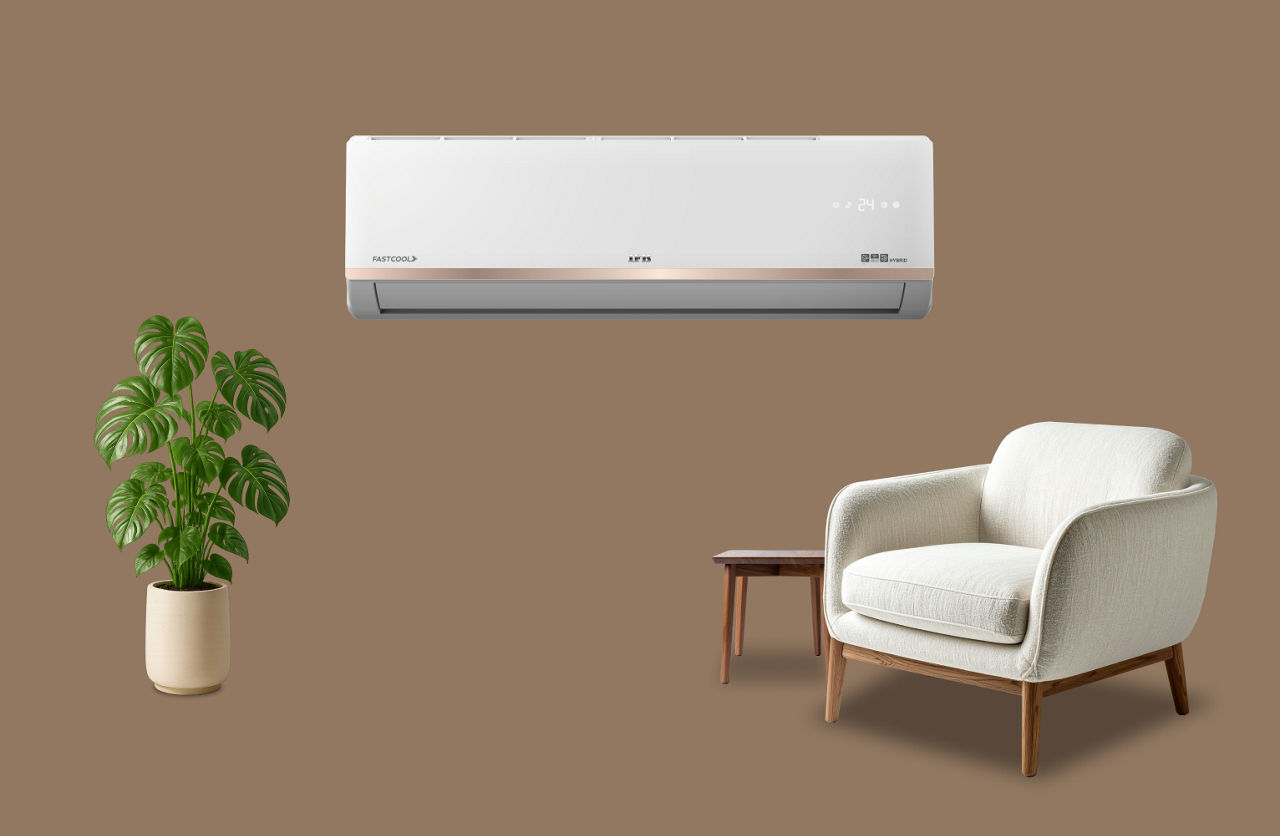
Your IFB FastCool AC gives you full flexibility for whatever the day demands: Dry mode for the grey, sticky days when moisture is the problem; Hybrid mode when temperatures spike; Fan mode for gentler circulation.
Built for the Long, Wet Stretch
A few other things matter when an AC is running for three consecutive humid months rather than the occasional hot afternoon..
Self-Clean technology in IFB FastCool AC runs the evaporator through a condensation, frosting, defrosting, and drying cycle at the press of a button, clearing dust, mould, and bacterial buildup before it settles in. Over a long wet season, this is the difference between an AC that stays a clean-air source and one that quietly becomes a damp, musty surface of its own, working against the very air quality the 7-Stage Air Treatment is maintaining.
The HD Compressor performs consistently at ambient temperatures up to 60 degrees Celsius, so the swing between a humid, overcast morning and a burst of post-rain heat does not disrupt cooling. The R32 refrigerant transfers heat more efficiently than older refrigerants, keeping power consumption reasonable through near-continuous operation. Smart IFB AC models connect to the MyIFB app, so the AC can be running and treating the air before you even walk through the door.
Your Home, Fully Considered
Dry mode and the 7-Stage Air Treatment are not doing the same thing, and that is the point. Dry mode takes the moisture out of the air, cutting off the conditions that allow mould, bacteria, and fungi to establish themselves in the first place. The 7-Stage Air Treatment cleans what is already airborne: the mould spores already circulating, the bacteria already in the room, the stale odour that has settled into a closed-up home over weeks of rain. One prevents the problem from getting worse. The other addresses what has already accumulated. Together, they give your AC a role in your home during monsoon that goes well beyond keeping a room cool.
Key Takeaways
Three months of monsoon quietly asks a lot of a home. The air gets heavier. Things that should stay fresh do not. The dampness you cannot see is often doing more damage than the dampness you can.
Running your IFB FastCool AC through the season, with Dry mode drawing the moisture out week after week and the 7-Stage Air Treatment cleaning what that moisture leaves behind in the air, means your home stays the way a home should feel during monsoon: dry, fresh, and genuinely comfortable to be inside. That is what damp walls, musty wardrobes, and sticky rooms feel like when the season is winning. This is how you make sure it does not.