 0
0


 Facebook
 X
X
 WhatsApp
 Email
Email

Somewhere in a drawer, or still in the box it came in, there's a manual that specifies exactly what kind of detergent your machine needs. Almost no one reads it. As a result, we choose detergents based on habit, price, or whatever catches the eye on the shelf. But powder and liquid detergents aren't in — and the right choice matters more to your laundry than habit ever will.
They're Not Just Different Formats — They're Different Formulas
Powder and liquid detergents share the same goal, but they use different chemistry to get there. Powder relies heavily on alkaline compounds, particularly sodium carbonate and zeolites, which break down dirt and help suspend it in water. Liquid detergents are built around surfactants — surface-active agents that lift oils and greasy residue from fabric at a molecular level and keep them dissolved in the wash water so they rinse away cleanly.
This difference matters more than most people realise, because not all stains are created equal. Mud, grass, and blood are protein-based or particulate stains that respond well to the alkaline action in powders. Grease, cooking oil, body oils, and everyday grime are exactly what liquid surfactant technology is designed to handle. Using the wrong formula doesn't necessarily ruin your clothes, but it does mean you're working against the chemistry rather than with it.
The Stain on Your Shirt Knows the Difference
Think about the stains your household most commonly deals with. If you're washing sports kit, garden clothes, or anything that's been near soil, a powder formula earns its place. Its alkaline action works aggressively on organic residue and particulate matter embedded in fabric fibers.
But if your typical laundry load involves food stains, oily collars and cuffs, sweat, or the general grime that builds up on clothes worn daily in a warm climate, a liquid option is going to outperform. Liquid detergent works well in cold or quick washes, and for most urban wardrobes where grease and everyday buildup make up the bulk of what you're washing, it is usually the more versatile choice.
Your Washing Machine Has an Opinion
This is where the powder-versus-liquid decision stops being theoretical and becomes genuinely important for your appliance.
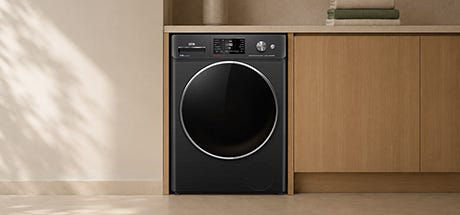
Front load washing machines use significantly less water per cycle than top load machines. That lower water volume is part of what makes them efficient, but it also means there's less water available to fully dissolve powder detergent. Over time, undissolved powder collects in the drum, the detergent drawer, and the internal pipes. The result is residue buildup, potential mold, and a machine that gradually becomes less effective and harder to clean.
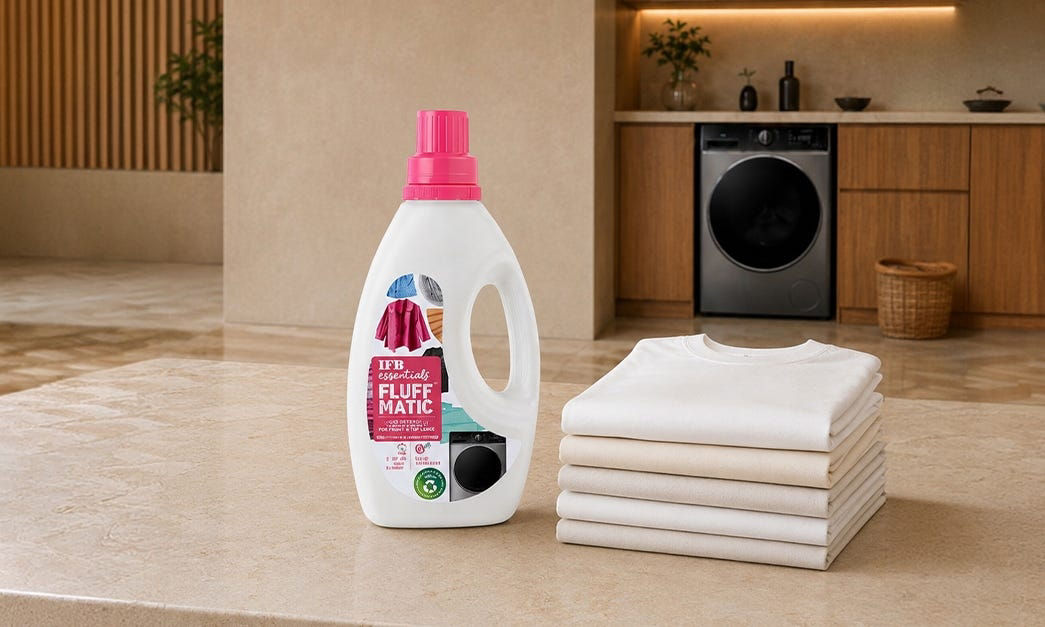
A liquid formula dissolves instantly, regardless of water temperature or quantity, which is why it's the right match for a front load machine. IFB Essentials Fluff Front Load Liquid Detergent is formulated specifically for this, with an enzyme-based, low-foam formula that works with the machine's lower water levels rather than against them. If you use a front load machine and you're still using powder, switching is worth it.
Top load machines are more forgiving. They use more water and have more mechanical agitation, so powder usually dissolves adequately. That said, liquid still dissolves faster and more completely even in a top loader, which matters for shorter or colder wash cycles.
Hard Water Changes the Equation
Hard water is a common reality across India. The dissolved calcium and magnesium it contains react with detergent ingredients, limiting their effectiveness and making it harder to achieve the same cleaning performance as in soft water.
Powder detergent is more vulnerable to this effect. The mineral interference can cause undissolved particles and a chalky film that sometimes stays on clothes. To compensate, many people increase the amount they use, which pushes up cost and increases the residue problem.
Liquid detergents are generally more resistant to hard water minerals. Their surfactant-based formulas maintain cleaning performance better across water quality variations, which makes them a sensible choice for households in hard water areas, without needing to adjust quantities or add a separate softener for most everyday washes.
The Per-Wash Cost Is Closer Than You Think
Powder's lower shelf price is real. But it's only part of the story. The actual cost of doing laundry is measured per wash, not per pack, and that calculation includes how much product you need each time.
A liquid detergent used at the recommended dose, typically 30 to 40 ml per wash, is a controlled quantity. A powder is often dispensed by eye, especially if you've lost the measuring scoop, which means most people consistently use more than they need. When you account for recommended dosage and actual usage, the per-wash cost of a quality liquid and a mid-range powder frequently works out within a few rupees of each other. At that point, the machine compatibility, stain performance, and hard water advantage of a liquid formula become the deciding factors.
So Which One Should You Be Using?
For most households with a front load washing machine, a liquid formula isn't just a preference, it's the option that protects the appliance over time. For top load machines, either can work, but liquid still dissolves more reliably and performs better in hard water and short cycles. If your laundry skews heavily toward mud and grass stains, powder earns a spot in your routine. For everything else, a good liquid detergent handles the range of everyday stains more consistently.
The choice doesn't have to be permanent either. Keeping both on hand and matching the formula to the wash load is exactly the kind of small habit that makes a visible difference in how your clothes come out.
Key Takeaways
The powder-versus-liquid question isn't really about which is better — it's about which is better for your specific machine, the water, and the stains you're actually washing. Most people settle on one product out of habit and use it for everything, but a little awareness about how detergent chemistry works goes a long way. Getting this right doesn't just improve washing results; it also reduces the wear on your machine and your clothes.