 0
0


 Facebook
 X
X
 WhatsApp
 Email
Email

A muddy afternoon on the football field. An ice cream mishap at a birthday party. That white shirt, spotless this morning, looks like a crime scene by lunchtime. With kids, stains aren't occasional accidents — they're a daily reality. The good news? Most stains come out completely. All you need is the right technique.
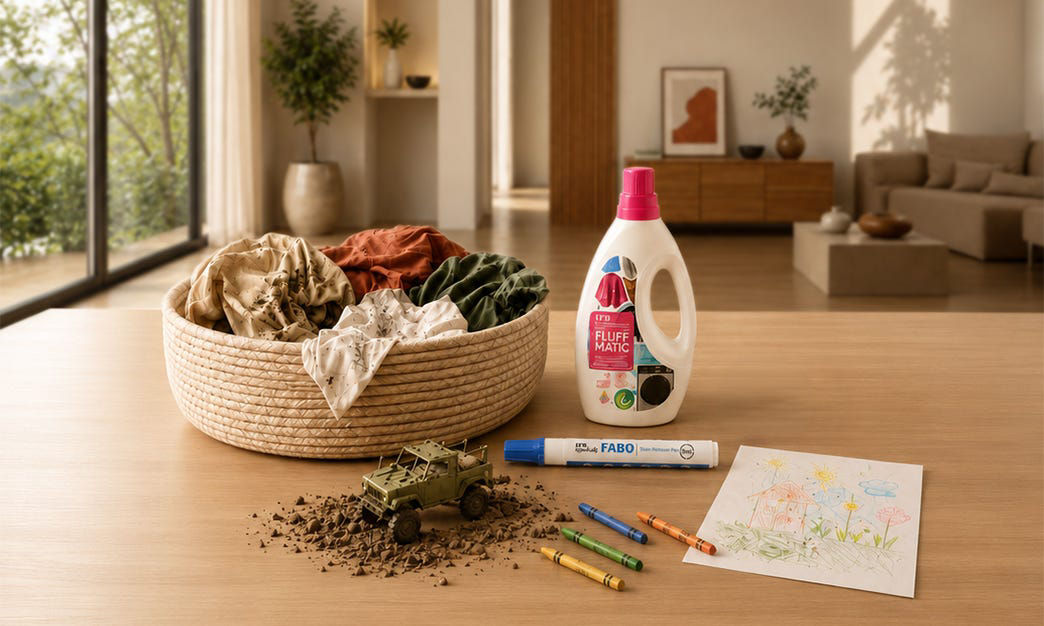
Stains get harder to remove the longer you wait. The steps below work best when you act quickly, but they will still rescue fabric even hours later if you follow them in the right order. What helps before you even start is pre-treating the stain with IFB Essentials Fabo Stain Remover. It works directly on the stain before the wash and does the heavy lifting so the machine doesn't have to.
1. Chocolate
Resist the urge to rub. Scrape off any solid chocolate first using the edge of a spoon, then soak the fabric in cold water for at least 20 minutes. Once soaked, apply IFB Essentials Fabo stain remover directly to the stain with the tip applicator, work it in gently, and let it sit for 10 to 15 minutes before washing normally.
2. Grass and Mud
This one requires patience, which goes against every instinct when you see muddy football socks come through the door. Let the mud dry completely before you do anything. Trying to treat wet mud just smears it further into the weave. Once dry, brush off the flakes with a stiff brush or an old toothbrush, apply Fabo directly to the stained area, and let it work for 10 to 15 minutes before washing. For heavy stains, check the care label and select the appropriate wash program.
3. Ketchup
Scrape away the excess first, working from the outer edges of the stain inward so you don't spread it. Rinse immediately under cold running water from the underside of the fabric, so the stain gets pushed out rather than through. If the stain is still visible after rinsing, apply Fabo directly, leave it for 10 minutes, then wash normally
4. Fruit and Fruit Juice
Time is of the essence here. Fruit contains natural acids and sugars that bond quickly to fibres. Get the garment under cold running water and rinse from the back of the fabric. If the stain has already started to dry, apply Fabo to the affected area and let it sit for 10 to 15 minutes before washing.
5. Ice Cream
Ice cream is a combination of fat and protein, which means heat is the enemy. Rinse the stained area thoroughly under cold water — never warm or hot — then apply Fabo and let it work for 10 to 15 minutes. The fat content in ice cream can leave a greasy shadow even after the visible stain disappears, so check carefully before drying, and avoid heat-drying until you're sure the stain is fully gone.
6. Ink
Ballpoint ink and marker stains are easier to remove when treated before they set into the fibres. Apply Fabo directly to the stained area using the tip applicator, work it in gently, and leave it for 10–15 minutes before washing. For ink accidents on the go, the IFB Essentials Fabo Stain Remover Pen lets you treat the stain immediately, so it's ready for a proper wash later.
7. Crayon
Crayon is wax-based, and trying to rub it off will make things worse. Scrape off the waxy deposit with the edge of a spoon or a dull knife before applying any liquid. Once the wax is removed, apply Fabo directly to the stain and let it work for 10 to 15 minutes before washing. Check that the stain is completely gone before the garment goes near a dryer, as heat will melt any remaining wax into the fibres.
8. Blood
Cold water only, always. Never use warm or hot water at any stage. Hot water causes the proteins in blood to coagulate and bond permanently with fabric fibres, and no amount of washing will fix it after that point. Rinse the stain immediately under cold running water, then apply Fabo and gently work it into the fabric before washing. The same works for dried blood stains.
9. Clay and Play-Doh
Clay and play-doh stains look alarming when wet but are easier to handle once dry. The instinct to wipe them off immediately works against you here. Let the clay dry completely, then break off the solid pieces by hand or flake them away with a stiff brush. What's left is a colour residue sitting in the fibres. Apply Fabo directly to that area with the applicator, leave it for 10 to 15 minutes, then wash as usual.
10. Oil and Curry
Do not rinse with water first. Water and oil don't mix, and adding water to a fresh oil or curry stain will spread it. Blot the excess with a clean cloth or paper towel, working from the outer edge inward. Once the surface residue is gone, apply Fabo directly to the stain, leave it for 10 to 15 minutes, then put the garment in the wash. Curry stains also benefit from a short spell of indirect sunlight after washing, which helps fade any residual turmeric pigment
The Rule That Overrides All Others
For most stains, never put the garment in the dryer until you are completely certain the stain is gone. Heat does not just set stains—it can make them significantly harder to remove in subsequent washes, and for some stain and fabric combinations, the effect may be permanent. Always inspect the stained area carefully in good natural light before drying. If there is any doubt, air dry and treat the stain again. One thing worth knowing: before using Fabo, the bulk of the stain residue must be scraped off the surface. Fabo can be applied directly to what remains. Cold water pre-soaking is only necessary for stains that are extremely heavy or have already dried into the fabric.