 0


 Facebook
 X
 WhatsApp
 Email

In a Nutshell
-
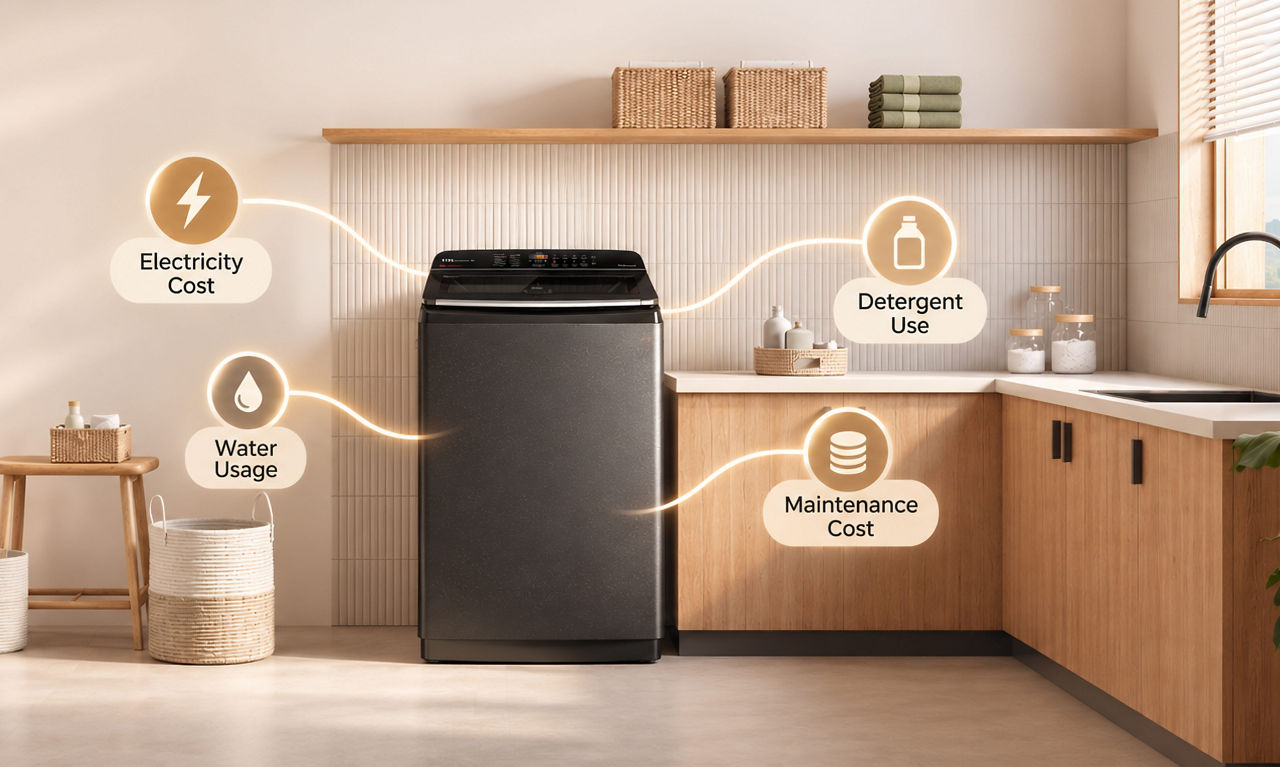
What you pay for: Every wash draws on electricity, water and detergent, plus routine upkeep over the years.
-
Temperature leads: Heating water is the largest electricity draw in any wash.
-
Do the maths: Units per cycle × your tariff gives the electricity cost per wash.
-
Type and habits: Machine type sets the water limit, while load size, cycle and dosing shape the rest.
What Makes Up the Running Cost of a Washing Machine?
Every wash uses electricity, water and detergent, and over the years your machine needs care too. Together, these make up the washing machine running cost.
The good news? Much of it depends on how you wash: the cycle, the temperature and how full the drum is.
How Electricity Consumption Affects Washing Machine Running Costs
Washing machine electricity consumption comes from two main sources:
-
Heater: Warms the water for hot washes and draws the most power by far.
-
Motor: Turns the drum. Longer cycles keep it running longer.
So the biggest drivers are wash temperature and cycle length. More BEE stars mean lower energy use per cycle under standard tests.
How to Calculate Your Washing Machine's Electricity Cost Per Cycle
Working out your washing machine electricity cost takes one simple sum:
-
Find the units: Check the BEE label or manual. One unit is one kWh.
-
Check your tariff: Your bill shows the rate per unit, which varies by state.
-
Multiply: Units per cycle × rate per unit = cost per wash.
Here's a worked example. Say a 6.5 kg, 5-star front load washing machine is rated at around 0.07 kWh per kg per cycle under BEE test conditions. That's about 0.46 units for a full standard cycle. At ₹7 per unit, it works out to about ₹3.20 a wash*.
A cold quick wash uses less than the test cycle, while a 95°C cycle uses more.
How Water Usage Adds to Your Laundry Costs
Washing machine water consumption depends on the machine type, load and wash cycle. Under BEE test conditions, the upper limits are:
-
Front loaders: 9 litres per kg of capacity per cycle.
-
Top load washing machines: 23 litres per kg per cycle.
Within those limits, the cycle matters. Extra rinses and higher water levels use more, while quick cycles use less. Machines with load sensing adjust the water to the load.
How Wash Temperature Affects Electricity Consumption
Heating water takes far more power than turning a drum. A typical washing machine heater is rated at around 2,000 W, so running it for 15 minutes uses about 0.5 units on its own.
That's why the hot water wash electricity cost is higher than a cold wash. Here's a simple way to choose:
| Temperature | Best for |
|---|---|
| Cold or 30°C | Everyday clothes and lightly worn loads |
| 40°C | Moderately soiled cottons and synthetics |
| 60°C and above | Bedding, towels and heavily soiled clothes |
How Much Does Detergent Add to Your Washing Costs?
Detergent cost depends on the type and how much you add. More detergent doesn't mean cleaner clothes. Extra suds can need more rinsing. Here's how to get it right:
-
Follow the dose: Use the amount on the pack for your load size and soil level.
-
Use the right type: Front loaders need low-foam detergent made for them.
Maintenance & Repair Costs Over a Washing Machine's Life
Whatever type you own, the washing machine maintenance cost comes down to a few basics:
-
Tub clean: Run the Tub Clean cycle every 40 washes to clear residue and odour.
-
Filters: Keep the inlet and drain filters clear.
-
Descaling: Limescale can build up over time, so descale once a year with a descaler such as Descal from IFB Essentials.
-
Preventive service: An IFB Annual Maintenance Contract includes two preventive maintenance visits a year.
The washing machine repair cost depends on the part and whether it's under warranty. IFB's TriShield Protection is a super warranty that only IFB offers: 4 years on the machine, 10 years on the motor and 10 years of spare parts support.
Keeping Repairs Simple
Within warranty, defective parts are repaired free of charge. A few simple steps help:
-
Use IFB’s authorised service partners. This also keeps your motor warranty valid.
-
Ask for genuine IFB spare parts.
-
Keep your invoice and warranty card handy for service visits.
Front Load vs Top Load vs Semi-Automatic: Running Cost Comparison
Here's how the three types compare:
| Type | BEE water limit | Electricity |
|---|---|---|
| Front load | 9 litres per kg per cycle | Energy use depends on programme time and temperature. Quick programmes finish faster. |
| Top load | 23 litres per kg per cycle | Cold washes mainly use motor power. |
| Semi-automatic | 23 litres per kg per cycle | Clothes are moved between tubs by hand. |
How Much Does It Cost to Run a Washing Machine?
To estimate a month, add these up:
-
Electricity: Units per wash × your tariff × washes per month.
-
Water: Litres per wash × washes per month.
-
Detergent: Amount per wash × washes per month.
-
Upkeep: Cleaning products and any service plan, spread across the year.
What Factors Can Increase or Reduce Your Washing Machine's Running Cost?
-
Load size: Several half loads use more in total than one full load.
-
Wash cycle: Long, hot, heavy-duty cycles use more than quick ones.
-
Limescale: Build-up over time affects performance, so descale once a year.
-
Upkeep: Blocked filters and scale make the machine work harder.
Practical Ways to Reduce Washing Machine Running Costs
-
Match the cycle to the load: Quick cycles for lightly worn clothes, heavy-duty only for heavy soiling.
-
Run full loads: Fill the drum comfortably, without overloading.
-
Wash cold: Use cold or 30°C for everyday clothes.
-
Measure detergent: Dose for the load and soil level.
-
Keep it clean: Tub cleans, filters and descaling.
*This is based on internal tests. Electricity rates and other details may vary from place to place.