 0
0


 Facebook
 X
X
 WhatsApp
 Email
Email

In a Nutshell
A front load washing machine and a top load washing machine offer two different ways to handle everyday laundry. The right choice depends on your household size, laundry habits, available space, water conditions, and the features that genuinely make everyday washing easier.
-
Front load: A good fit for households that prioritise water efficiency, fabric care, and advanced wash technology.
-
Top load: A convenient choice for easy loading and unloading, with the opening at the top.
-
For large households: Capacity should match the size and frequency of typical laundry loads.
-
For busy households: Features that reduce manual effort can make everyday laundry easier to manage.
-
Before buying: Consider capacity, water and energy use, useful features, maintenance, warranty, and long-term running costs.
Laundry Looks Different in Every Home
Some households wash a little every day. Others wait for the basket to fill up. Then there are bedsheets, towels, delicate fabrics, workwear, and school uniforms.
That is why choosing a washing machine is not simply about counting programmes or choosing the model with the longest list of features. It is about finding one that fits the way laundry actually happens at home.
A front load washing machine and a top load washing machine approach the same chore differently. Understanding those differences can help you choose a machine that fits your laundry routine.
Meet The Front Loader
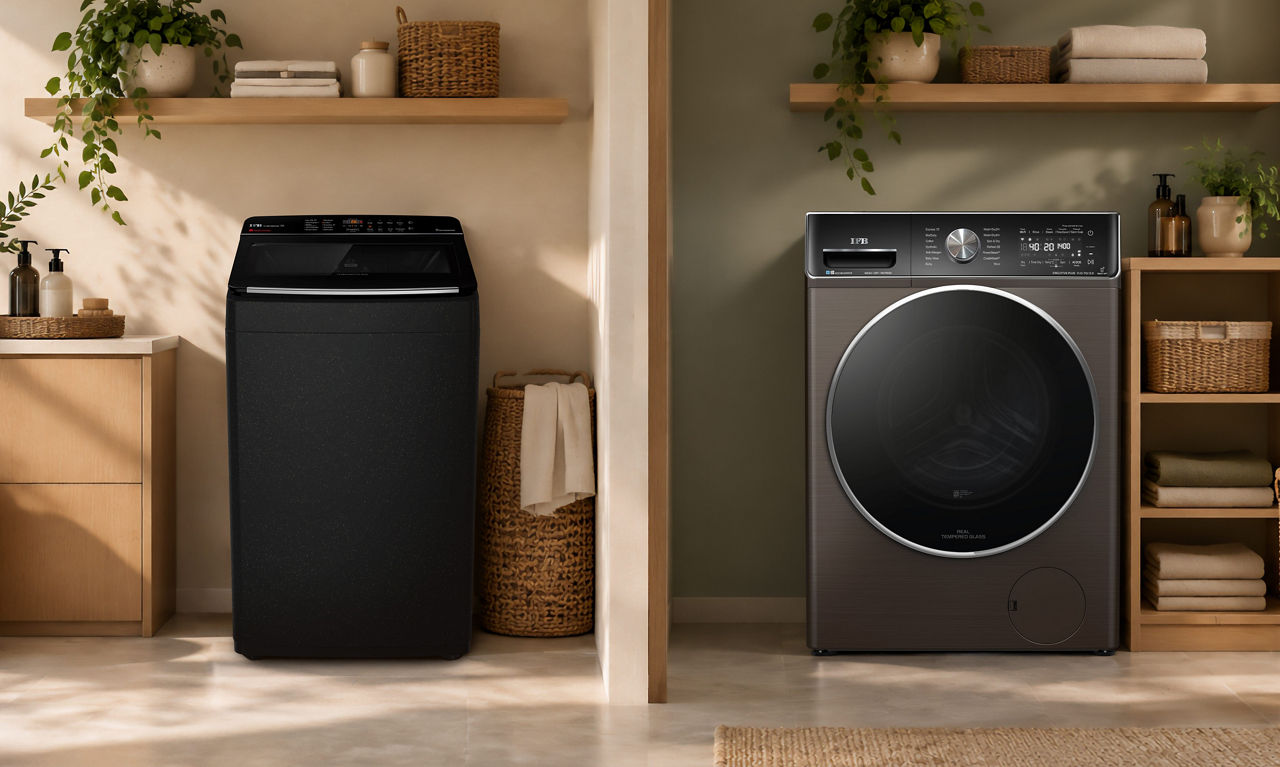
A front load washing machine has a door at the front and a horizontal drum. Clothes tumble through the wash as the drum rotates, creating a wash action designed to clean deeply while being considerate of fabrics.
Front loaders generally use less water than traditional top-loading designs, making them worth considering for homes where water efficiency matters. IFB front load models are also available with technologies such as Powered by Ai, Aqua Energie, Ai DOS™, Oxyjet®, Steam Refresh, Warm Soak, and Eco Inverter Motor.
The result is more than just a different door position. It is a wash experience built around intelligent care, efficiency, and fabric-conscious programmes.
Meet The Top Loader
A top load washing machine opens from above, so clothes can be loaded and unloaded without having to bend or squat.
That simple design can make a difference when laundry is frequent. It also makes the machine easy to use for everyday loads, whether you are washing clothes, towels, bedsheets, or uniforms.
Modern top loaders have evolved considerably too. IFB models can include Powered by Ai, ActivMix, Triadic Pulsator, 360° Bi-Axial Rotation, Pre Clean, Power Steam® with an in-built heater, Low Water Pressure Fill, and Eco Inverter Motor, depending on the model.
So the modern top loader combines easy access with increasingly intelligent wash technology.
Front Load Vs Top Load Washing Machine: The Differences That Matter
Top load and front load washing machines differ in more than door placement. They use water differently, move clothes differently, and suit different laundry habits. Knowing what matters to you can make the choice much simpler.
Water Use
Front loaders generally use less water because the clothes tumble through the wash rather than sitting in a higher water level. Top loaders use more water in their traditional wash action, although modern models can use intelligent sensing to adjust water levels according to the load.
Wash Action
This is where the two formats work quite differently. Front load washing machines use a tumbling action, lifting and dropping clothes as the drum rotates. Top load machines use technologies such as pulsator-based movement to create different wash motions. These different approaches can influence how clothes move through the wash and the kind of fabric care the machine offers.
Laundry Habits
The better fit can come down to how you actually do laundry. A front loader can suit households that value water efficiency and fabric-focused wash programmes, while a top loader can work well for those who prefer easy loading and unloading from above. The choice is less about one format being universally better and more about which design fits the way laundry happens at home.
Inside The Front Load Experience
The best front load washing machine features are the ones that quietly make everyday laundry easier. From getting the detergent dose right to adapting the wash to the load, these technologies are designed to bring more care, efficiency, and convenience into every cycle.
-
Ai DOS: Automatically doses detergent according to the wash, reducing guesswork and helping avoid unnecessary detergent use.
-
Oxyjet: Delivers a 10 kg wash in 60 minutes, while using up to 50% less detergent, up to 25% less water, and up to 40% less energy.
-
Steam Refresh: Freshens clothes in 30 minutes, helping remove unwanted odours and reduce wrinkles without detergent or water.
-
Powered by Ai: Detects laundry weight and fabric type, then adjusts water, wash movements, rinse level, and time to suit the load.
-
Aqua Energie: Treats hard water to improve detergent action while helping protect colours and reduce fading.
-
Warm Soak: Helps loosen embedded dirt before the main wash, giving detergent more time to work on tougher stains.
-
CradleWash: Uses gentler fabric movement to help care for delicate garments and reduce wear, distortion, or tangling.
Inside The Top Load Experience
A top loader brings easy access to the wash, but there is plenty happening beneath the lid too. These features combine practical convenience with intelligent wash action, helping handle everyday dirt with less manual effort.
-
Powered by Ai: Adjusts wash settings according to the load, helping optimise water and wash time.
-
ActivMix: Premixes detergent with water before it reaches the clothes, supporting even detergent distribution and helping reduce detergent residue.
-
Triadic Pulsator: Combines scrub, swirl, and punch movements to loosen stubborn dirt and improve wash action.
-
360° Bi-Axial Rotation: Moves clothes in multiple directions to help reduce tangling and support more even soaking and cleaning.
-
Pre Clean: Targets dirt, sweat, and grime around collars and cuffs before the main wash.
-
Low Water Pressure Fill: Allows applicable models to operate at water pressure as low as 0.1 bar, making the feature useful where water pressure is low or inconsistent.
-
In-Built Wheels: Makes it easier to move the washing machine when cleaning or carrying out routine maintenance.
When Front Load Makes Sense
A front load washing machine can make sense when water efficiency and a more fabric-focused wash experience are high on the list. Clothes tumble through a horizontal drum, creating a wash action that is well suited to different fabrics, while the format generally uses less water than traditional top-load designs.
IFB front load models add technologies such as Powered by Ai, Aqua Energie, CradleWash®, and Warm Soak. These features support different laundry needs, from adapting the wash to the load to caring for delicate fabrics and managing hard-water conditions.
When Top Load Makes Sense
A top load washing machine is built around easy access. The opening at the top makes loading and unloading straightforward, without having to bend or squat, which can be useful when laundry is a frequent part of the routine.
The format also brings practical features that suit specific household needs. Low Water Pressure Fill can help where water pressure is low or inconsistent, while In-Built Wheels make it easier to move the machine when needed. Features such as ActivMix, Triadic Pulsator, and Pre Clean add different wash actions and targeted cleaning to everyday loads.
Which One Fits Your Routine?
The right choice can look different from one household to another.
-
Families
Families often have mixed laundry needs, from everyday clothing and school uniforms to towels and bedsheets. Capacity, fabric-specific programmes, and wash flexibility should all be considered.
-
Working Professionals
When laundry has to fit around work and other commitments, time-saving features can matter. Oxyjet®, Time Saver, Steam Refresh, Ai DOS™, and connected controls on applicable models can help make the routine easier to manage.
-
Large Households
For larger households, capacity should be the starting point. A machine that comfortably handles the household's typical load can reduce the need for multiple cycles.
-
Budget Buyers
The top load washing machine price is only one part of the decision. Consider the machine's capacity, energy efficiency, water use, warranty, useful features, and expected frequency of use. A machine that costs less initially may not necessarily be the better fit for a household's needs over time.
The Questions Worth Asking Before You Buy
Think of this as a practical washing machine buying guide. Start with the way laundry is actually done at home.
-
Start with capacity: Choose a size that matches the household's regular laundry volume rather than simply opting for the largest drum.
-
Measure the space: Check width, depth, height, door clearance, and space needed to load and unload comfortably.
-
Think about water conditions: Hard water and inconsistent water pressure can influence which technologies are useful in your home.
-
Consider the fabrics you wash: Delicates, everyday clothing, uniforms, sportswear, towels, and bedsheets can all have different care requirements.
-
Look at energy efficiency: Features such as Eco Inverter Motor and BEE 5 Star ratings can help support more efficient everyday operation.
-
Choose features that solve real problems: A useful feature is one that makes a recurring task easier, whether that means automatic detergent dosing, faster washes, easier loading, or better care for delicate fabrics.
One Last Thing Before You Choose
There is no universal answer to the front load versus top load question.
A front loader may suit a household that values water efficiency, fabric care, and technologies that take more of the thinking out of laundry. A top loader may be more natural for someone who values easy loading, accessible operation, and practical everyday washing.
Start with the home, not the machine. Think about capacity, available space, water conditions, laundry volume, fabrics, energy use, and the features you are most likely to use.
And once the machine is home, everyday habits still matter. From loading the drum correctly to using the right amount of detergent and choosing the right cycle, IFB's washing machine dos and don'ts covers simple practices that can help care for both clothes and the appliance.