 0


 Facebook
 X
 WhatsApp
 Email

In a Nutshell
-
Prep is half the job: A level floor, a cold-water tap, an earthed socket and a drain within reach make installation quick.
-
Leave it to IFB: Authorised IFB technicians handle the fitting, from the transit bolts to the test run.
-
Check before the first wash: No bolts, no rocking, no leaks, and water drains fully.
-
Know when to call: Error codes, leaks or heavy vibration need IFB support.
Start Before the Box Arrives
Here's something most people don't think about until delivery day: how your washing machine is set up decides how well it runs.
The good news? Proper washing machine installation is simple when you know what to expect. This IFB washing machine installation guide covers what to prepare, what happens on the day, and what to check after.
Get Your Space Ready
Most installation delays come from the space, not the machine. Check these before delivery day:
-
Floor: Firm and level, with no carpet. A concrete floor helps reduce vibration.
-
Space: Leave about 10 cm between the back of the machine and the wall.
-
Water tap: A cold-water tap with a ¾-inch thread, within 1 metre.
-
Water pressure: At least 0.3 bar on most models. Low or patchy pressure? Low Water Pressure Fill on applicable top load models works at as low as 0.1 bar.
-
Power socket: An earthed 3-pin, 16 A socket with a 16 A MCB, within 1 metre.
-
Drain point: A sink or drain the hose can reach without stretching.
IFB's guide to planning your laundry area has more layout ideas.
What Happens on Installation Day
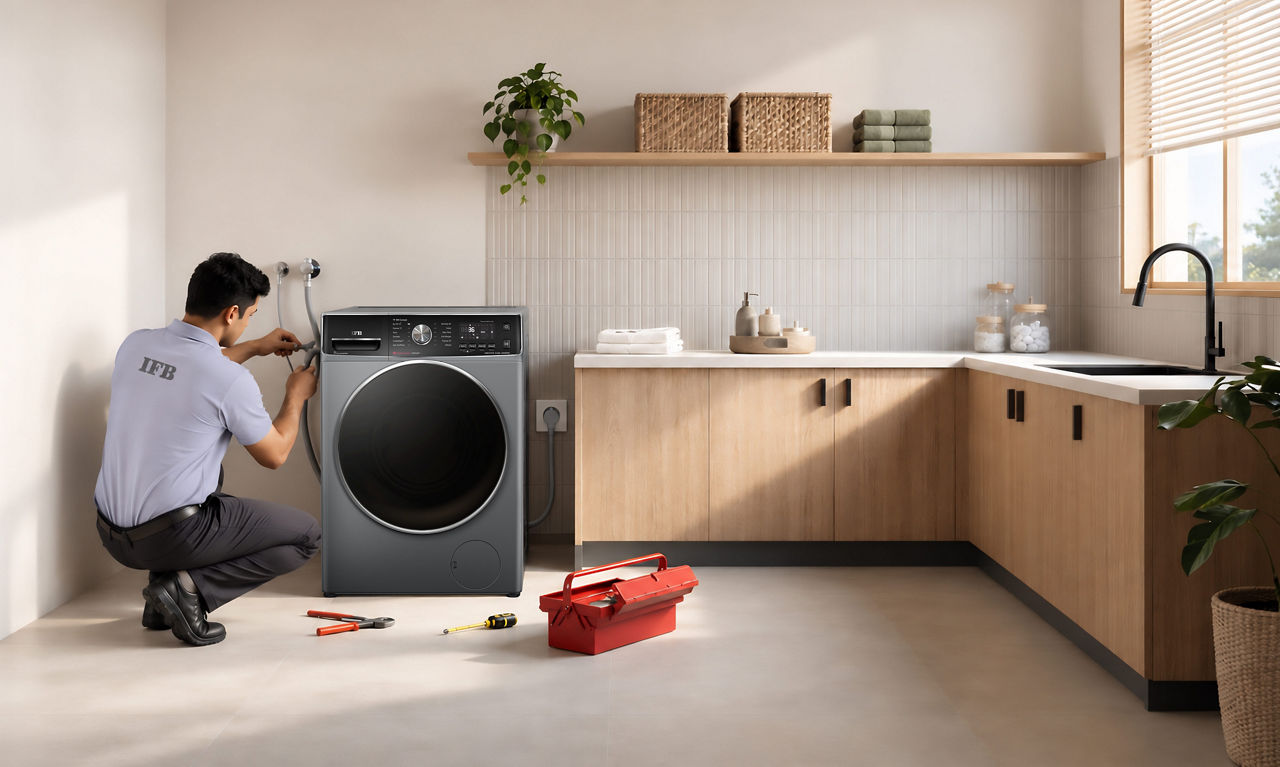
Wondering how to install IFB washing machine models? The IFB washing machine installation process is handled by authorised IFB technicians. Here's what it usually involves:
-
Unboxing: The machine is checked for any transit damage.
-
Removing the washing machine transit bolts: These lock the drum in place during transport. They're removed and the holes are capped.
-
Fitting the rat mesh: A rat mesh comes with your machine, and the technician fits it during installation.
-
Washing machine levelling: The feet are adjusted until all four sit firmly on the floor.
-
Washing machine water inlet connection: The tap is flushed to clear dirt, then the new inlet hose is fitted.
-
Washing machine drain hose installation: The hose is clamped and routed into the drain without kinks.
-
Test run: A short empty cycle confirms the machine fills, drains and spins properly.
Keep the transit bolts somewhere safe. You'll need them if you ever shift homes.
Two Minutes Well Spent: The Post-Installation Check
Before your first load, run through this quick check:
-
Bolts are out: Caps sit where the transit bolts were.
-
The machine is steady: Press each top corner. It shouldn't rock.
-
No leaks: The tap and hose joints stay dry.
-
Water drains fully: The drum empties completely.
All good? Register your product so your TriShield Protection is on record: a 4-year machine warranty, a 10-year motor warranty and 10 years of spares support.
Small Slips That Cause Big Shakes
Most installation problems come down to a few avoidable slips:
-
Leaving transit bolts in: The machine shakes hard and can be damaged.
-
Reusing old hoses: Always use the new hoses that come with the machine.
-
Using an extension cord: Plug straight into an earthed socket.
-
Placing it on carpet or a wobbly stand: An uneven base means more noise and vibration.
-
Kinking the drain hose: Water may not drain fully.
When to Call IFB
Some things are best left to a trained technician. Contact IFB washing machine service if:
-
An error code appears on the display.
-
You spot leaks around the hoses or door.
-
The machine still shakes heavily after levelling.
-
Water won't fill or drain.
For IFB washing machine support, visit IFB Appliances Support or the Contact Us page.
Lost your manual? Find it on IFB Product Help.
A Good Start Lasts for Years
Good installation comes down to a simple order: prepare the space, let IFB handle the fitting, then check the basics. Keep this washing machine installation guide handy on delivery day.
Still choosing? Browse the full range of IFB washing machines, including front load and top load models.