 0


 Facebook
 X
 WhatsApp
 Email

In a Nutshell
-
Where it adds up: Each front load wash uses electricity, a modest amount of water and low-foam detergent, with drum care on top.
-
Temperature choice: Settings run from cold up to 90°C or 95°C, and the one you pick shapes most of the electricity used.
-
Low water use: Front loaders tumble clothes through a small pool of water, so they use less than other types.
-
Upkeep is simple: Run Tub Clean every 40 washes, wipe the door seal and descale once a year.
Understanding the Running Cost of a Front Load Washing Machine
Front loaders are known for gentle tumbling and low water use. So what goes into running one, wash after wash?
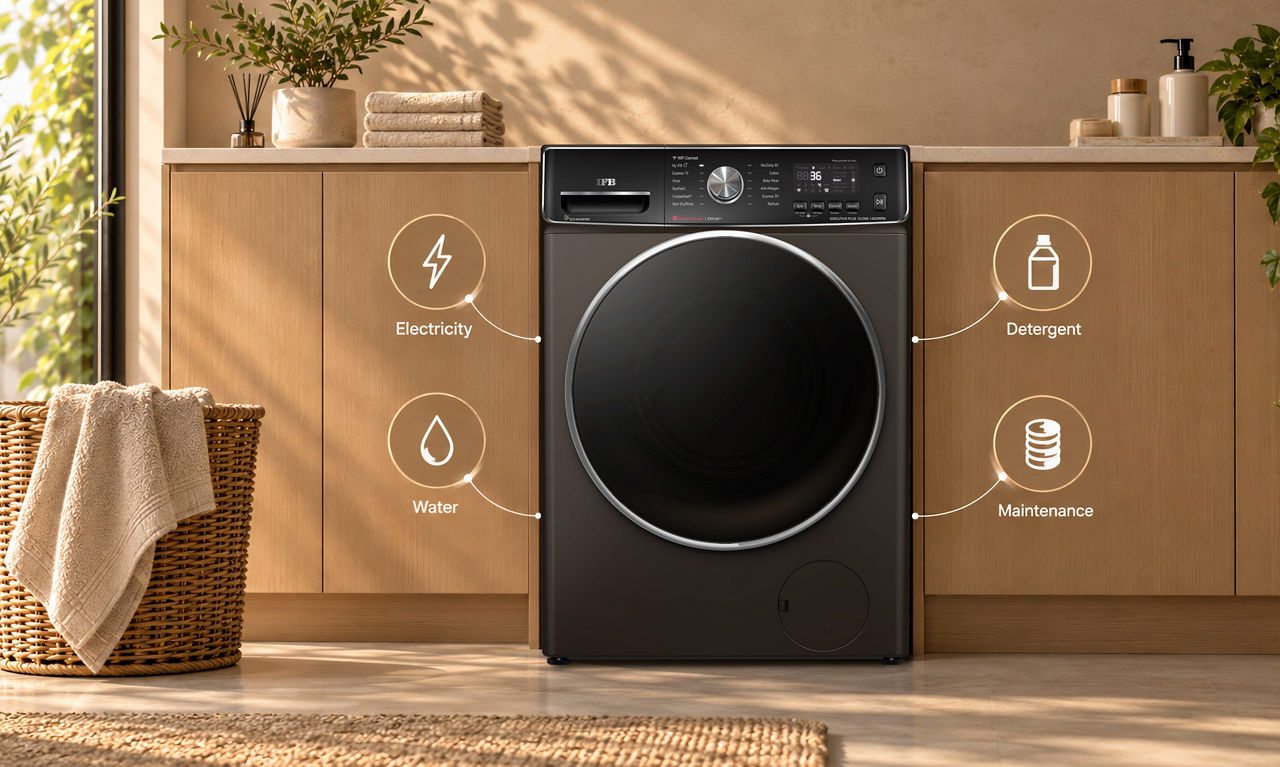
The front load washing machine running cost has four parts: electricity, water, detergent and upkeep. In a front loader, wash temperature steers most of it, since water use is already low.
Electricity Consumption of a Front Load Washing Machine
Front load washing machine electricity consumption depends mostly on whether the water is heated. Here's what draws power:
-
Heater: Heats the water on warm and hot programmes. At roughly 2 kW, it uses more power than any other part.
-
Motor: Tumbles the drum through the wash and powers the spin, so programme length matters.
-
Drain pump: A small load by comparison.
BEE rates front loaders on a cotton 60°C programme. A 5-star front load washing machine rated at around 0.07 kWh per kg per cycle uses about 0.46 units for a full 6.5 kg standard cycle.
Temperature makes the biggest difference. Most front loaders offer settings from cold up to 90°C or 95°C. A cold wash uses far less than the 60°C test cycle, while the hottest settings use more.
Water Consumption: How Much Does a Front Load Machine Use?
Front load washing machine water consumption is low because the drum tumbles clothes through a small pool of water rather than filling a tub. BEE caps front loaders at 9 litres per kg per cycle under test conditions. For a full 6.5 kg load, that's up to about 58 litres.
Actual use depends on the cycle you choose:
-
Quick cycles: Use less water for lightly worn clothes.
-
Extra rinse: Adds water to every wash it is switched on for.
-
Heavy-duty and bulky cycles: Use more to handle bigger, dirtier loads.
-
Load sensing: Models with this feature weigh the clothes and add only the water the load needs.
Detergent Usage and Dosage
Front load washing machine detergent usage needs a little care, because front loaders use less water. Here's how to get it right:
-
Use low-foam detergent: Choose one made for front loaders. Regular detergent can over-foam.
-
Measure each time: Scale the dose to how big and how dirty the load is. With so little water in the drum, an overdose just becomes foam that needs more rinsing.
-
Tough stains: Pick a suitable programme or temperature rather than adding more detergent.
Maintenance and Repair Over the Machine's Life
Front load washing machine maintenance cost centres on the drum, the door seal and the drawer:
-
Tub clean: Every 40 washes, a Tub Clean cycle flushes detergent residue out of the drum.
-
Door seal and drawer: Wipe the seal and rinse the drawer to stop build-up.
-
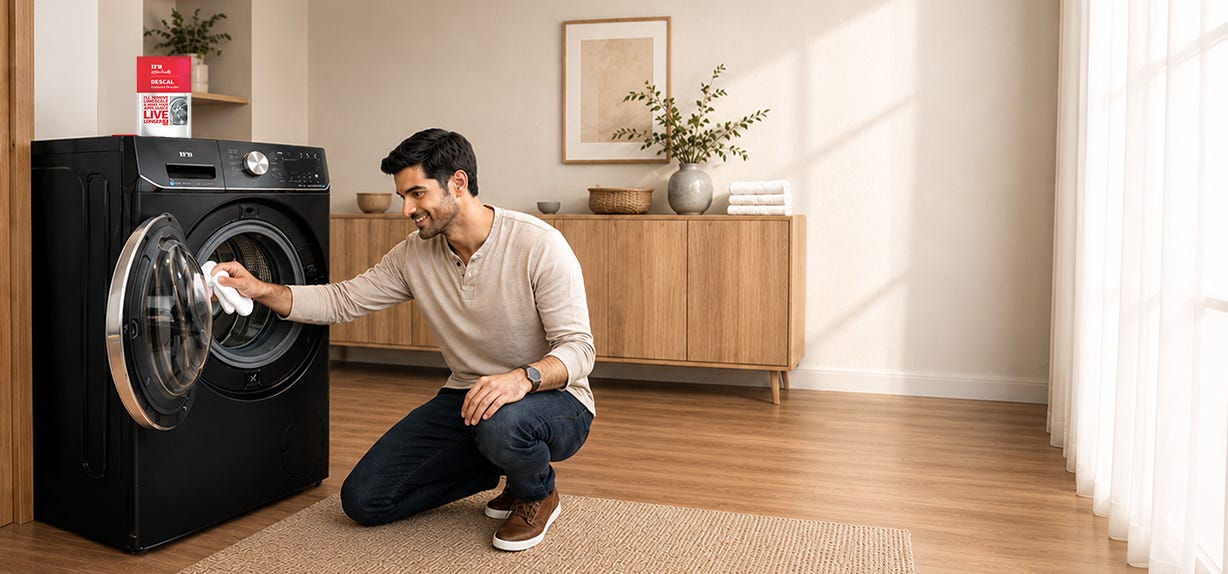
Descaling: The heater sits inside the tub, where limescale can collect, so treat it once every 12 months with Descal, part of the IFB Essentials.
-
Expert check-ups: With an IFB AMC plan, trained technicians check the machine twice a year and fit only genuine parts.
When something needs fixing, front load washing machine repair cost comes down to which part failed and whether your cover still applies. IFB's TriShield Protection covers the machine for 4 years and the motor for 10, with spare parts support for 10 years too.
Calculating the Total Running Cost
A front load month adds up from four lines. The first gives your front load washing machine monthly electricity cost:
| Part | How to work it out |
|---|---|
| Electricity | Rated units per wash × your per-unit rate × washes in the month |
| Water | Litres per wash (up to 9 per kg) × washes in the month, if water is metered or pumped |
| Detergent | Low-foam dose per wash × washes in the month, at your pack price |
| Upkeep | Tub Clean, yearly descaling and any AMC, divided across 12 months |
For example, a cycle that uses about 0.46 units, at ₹7 per unit, works out to about ₹3.20 in electricity*. Your own machine's rating is printed on its BEE energy label. Your figures will depend on your model, cycles, local tariff and water source.
Practical Ways to Reduce Front Load Washing Machine Running Costs
The biggest gains come from choosing the right cycle for each load:
| Load | Cycle and temperature |
|---|---|
| Lightly worn everyday clothes | Quick cycle, cold or 30°C |
| Regular mixed loads | Everyday or mixed cycle, 30°C or 40°C |
| Delicates and woollens | Delicate or wool cycle, cold or 30°C |
| Bedding, towels, heavy soiling | Cotton or bulky cycle, 60°C |
A few habits help too:
-
Fill the drum well: Load it to about 75–80% of capacity, leaving room for clothes to tumble.
-
Skip extras you don't need: Leave pre-wash and extra rinse off unless the load is heavily soiled.
-
Dose low-foam detergent: Use the pack amount for the load, as the low water level leaves little room for suds.
-
Care for the drum: Tub Clean every 40 washes and a yearly descale keep the heater and drum in good shape.
Small Habits, Steady Running
Running a front loader comes down to a few habits: the right cycle for each load, cold washes when you can, full loads and the right detergent.
*This is based on internal tests. Electricity rates and other details may vary from place to place.