 13
13


 Facebook
 X
X
 WhatsApp
 Email
Email

Dishwashing is one of those household tasks that we rarely examine. It just happens, three times a day, in the same way it always has. Sponge, soap, running water, dry with a cloth. It feels thorough because it is familiar.
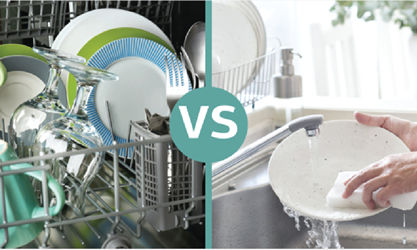
But familiar and thorough are different things. The temperature at which most people hand-wash dishes sits around 40°C, comfortable for skin and inadequate for bacteria. The cloth used to dry washed dishes is typically one of the most contaminated surfaces in a kitchen. And the time? Fifteen to thirty minutes after every meal adds up to several hundred hours a year.
A dishwasher addresses all three of these, quietly, automatically, and thoroughly. The ten reasons below make the case in full
1. 70°C Hot Wash with Steam
Most hand washing happens at 40°C or below. Bacteria need sustained hot wash at above 60°C to be properly eliminated. A temperature our hands cannot tolerate.
IFB dishwashers run the Hot Wash cycle at 70°C, combined with steam, killing up to 99.99% of germs. On glassware and steel cutlery, hand-washing leaves behind what it can't kill — invisible to the eye. At 70°C, it's gone.
Washing in the sink was always a compromise.
2. Unique Spray Action for Indian Cooking
Dissolving turmeric stains, baked-on spice residue, and oil from deep frying requires water at high temperature at 70°C and sustained water spray pressure, from multiple angles simultaneously. In a kitchen dishwasher, spray arms reach every corner of the kadhai and cookware. Oil lifts away in the heat. Spice residue that requires vigorous scrubbing at the sink simply releases.
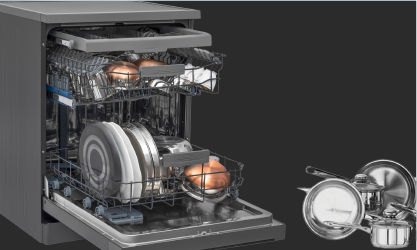
The Neptune VX14 features Unique Spray Action that targets every surface inside the load, reaching turmeric, oil, and baked-on residue wherever it is settled.
3. Water Efficiency Per Cycle
The assumption that dishwashers waste water is persistent. It is also wrong. A full IFB automatic dishwasher cycle uses approximately one bucket of water. Hand washing the same load typically requires 40 to 60 litres.
Most of the water used in hand washing runs straight down the drain. The efficiency gap widens with larger loads — counted across a month, the difference runs into hundreds of litres.
4. Ai Powered Wash Programmes
Not every wash load needs the same treatment. Running a heavy-duty cycle on everyday plates wastes water and energy. Running a light cycle on masala-coated pans leaves residue behind.
Neptune VX16 detects the level of soilage in the wash load at the end of the prewash cycle. It then sets the water temperature, time, intensity, and number of rinse cycles needed for a perfect wash. You select the Ai programme based on the items being washed. The machine determines exactly what the load needs — no manual adjustments required.
5. Time Savings, Daily
Fifteen minutes after breakfast. Twenty after lunch. Thirty after dinner. That is roughly an hour of standing at the sink daily. Across a year, that is more than three hundred and sixty hours spent on a single repetitive task.
A dishwasher machine for home takes minutes to load and to unload. The rest happens without you. That hour lost comes back. Every day.
6. Interior LED Lighting
Loading a dishwasher in a poorly lit kitchen is where accidents happen. Glasses get placed too close together, dinnerware stacks unevenly, and fragile items do not get the space they need. By the time you notice, something has already chipped.
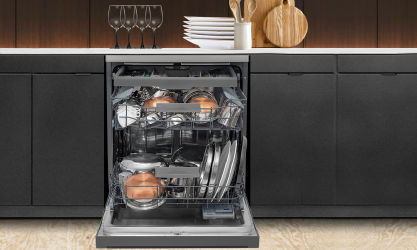
The IFB dishwasher's interior LED light illuminates the full cavity so you can see exactly what you are placing and where. Every rack, every corner, every item clearly visible. It takes the guesswork out of loading and protects your better glassware and dinnerware from the kind of damage that happens when you are working in the dark.
7. Built-In Water Softener
Hard water leaves white mineral deposits on glasses, inside spray arms, and dulls the finish on steel and ceramic over time. In many Indian cities, mineral content in tap water is high enough for this to be a persistent and visible problem.
The Neptune VX15 comes with a built-in water softening device that treats hard water before it enters the wash cycle, significantly reducing mineral residue on dishes and internal components.
Dishes come out clean and spot-free. The built-in softener keeps scale at bay through regular use, but to maintain the machine's full performance over time, IFB recommends periodic use of IFB essentials Dishwasher Descale, a descaling solution designed for IFB dishwashers, to clear any limescale accumulation in spray arms and internal parts. Used together, the softener and Descal keep the machine running at full capacity from the first cycle to the last.
8. Flexi Half Load
Not every meal fills a full load. For smaller households and couples, waiting for a full rack means dishes sit, and running a half-empty cycle feels wasteful. It is a small daily friction that adds up.
Flexi Half Load solves it. Load only the upper or lower basket and start the wash. The machine adjusts water, time, and energy to match what is actually inside. No waiting, no waste.
9. Mini 14 Wash Programme
A full cycle for a few lightly used plates and two glasses is more than the situation calls for. Running a complete wash for items that were barely soiled wastes water, energy, and time — especially on days when you need the dishes back quickly.
The Mini 14 programme on the IFB dishwasher is built for exactly this. A fast, efficient wash for up to 4 place settings, designed for lightly soiled or recently used items. You get clean dishes in a fraction of the usual time, without running a full cycle when the load does not need one.
10. Auto-Open Door Drying
Damp dishes require towel drying, which introduces bacteria from the cloth back onto surfaces that were just cleaned. It is a step that undermines the hygiene of the wash. Most of us do this without thinking about what the cloth is actually carrying.
Auto-Open Door releases steam at the end of the cycle and allows natural air circulation, leaving dishes dry and spot-free. Combined with the hot steam during the wash phase, dishes come out ready to put away directly from the standard dishwasher. No towel. No re-contamination.
Key Takeaways
A dishwasher does not ask you to change how you cook. It just handles what comes after. Cleaner dishes, less water, no towel, no scrubbing — and a machine that figures out what your load actually needs before you've even sat down to eat. At some point, this stops feeling like a feature list and starts feeling obvious.
*Features vary by model. Check specifications before purchase.