


Featured in Breads of Bombay
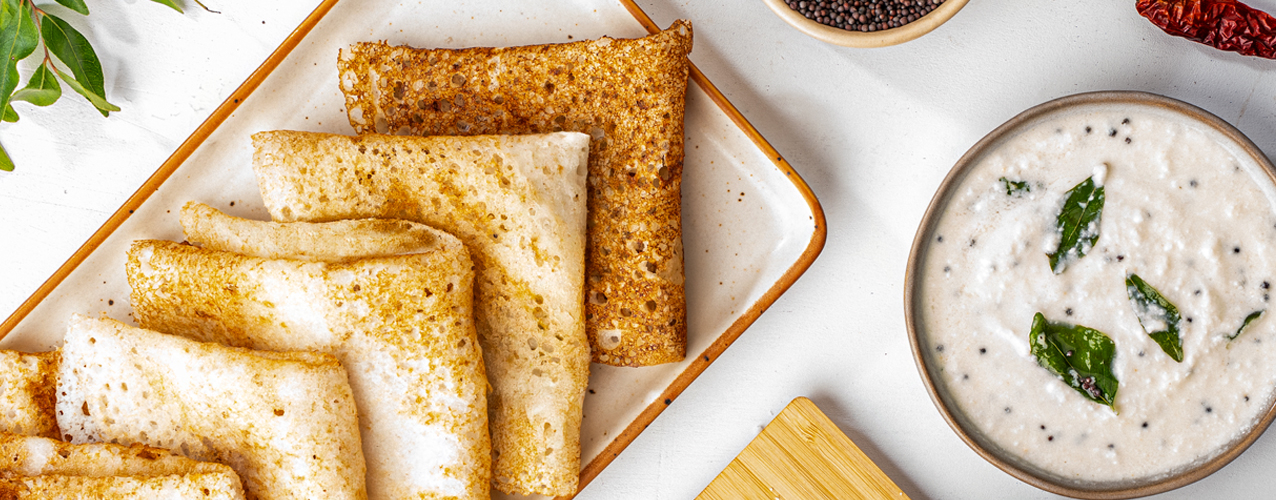
Dosa & Coconut Chutney
From temple traditions to city streets


 Facebook
 X
X
 WhatsApp
 Email
Email
-
 Hob
Hob
The dosa’s story is one of quiet transformation—from a 1st-century South Indian offering to a beloved street and café favorite across Bombay. Made from a fermented mix of rice, urad dal, and fenugreek seeds, its crisp texture and subtle tang come alive on a hot griddle. When paired with coconut chutney or sambar, each bite carries echoes of temple kitchens, Udupi cafés, and Bombay’s cosmopolitan appetite. Simple to make yet infinitely satisfying, the dosa is proof that culinary heritage can travel, adapt, and still remain unmistakably its own.
Ingredients
For Dosa:
- ½ Cup idli rice (parboiled or regular)
- ½ cup ponni rice
- ¼ cup ural dal
- ⅛ tsp fenugreek seeds
- 2 tbsp poha
- 1.5 cups water for soaking both rice and urad dal
- ½ tsp salt
- Oil/ghee as required
For Coconut Chutney:
- Grated coconut (of half a small coconut)
- 3 tbsp roasted bengal gram (putana)
- 3 to 5 pods of garlic
- 2 green chillies
- 1 tsp mustard seeds
- 1 sprig of curry leaves
- Asafoetida (optional)
- Coconut oil/sesame oil
- Water - ½ cup for a thick chutney (1 to 1.5 cups for a thin or runny chutney)
Method
For Dosa:
- Soak the rice (idli, ponni, flattened), lentils and fenugreek seeds overnight. Grind into a thick paste using some water.
- Allow this batter to ferment for around 5-6 hours or overnight.
- Add salt and mix well.
- Heat a cast iron pan. Once hot, spread ¼ to ½ tsp oil all over the pan.
- Take a ladle full of the batter. Pour and gently spread the batter starting from the center and moving outwards.
- Cook the dosa on a low to medium heat.
- When you see the batter on the top has cooked well and the bottom has become crisp and golden, then sprinkle ¼ to ½ tsp oil on the edges and center.
- Flip the dosa and immediately take it off the pan.
- Serve these crisp dosas hot with coconut chutney.
For Coconut Chutney:
- Grind grated coconut, garlic, roasted Bengal gram (Putana), green chillies in a mixer jar. After a few seconds of whipping, add 3 to 4 tbsp of water. Blend it.
- Open the lid, add salt and add another 3 to 4 tbsp of water. Blend it well.
- Check for the thickness you prefer. Add more water and blend it if you want it thinner than this.
- For the tadka, heat 1-2 tsp of coconut or sesame oil.
- Add mustard seeds and asafoetida (optional). Wait for the mustard to splutter.
- Turn the heat off and add in curry leaves.
- Pour the hot tempered oil onto the bowl of chutney.
Find out more about the history and tradition of the dish
Dive into the rich stories, culture, and traditions behind India’s diverse regional cuisines.

Rate This Recipe



Similar Recipes
 15 mins
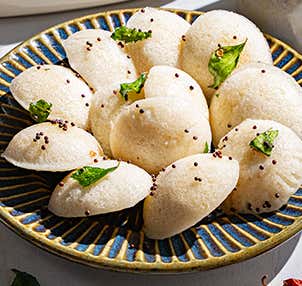
Upvas Idli

 18 mins
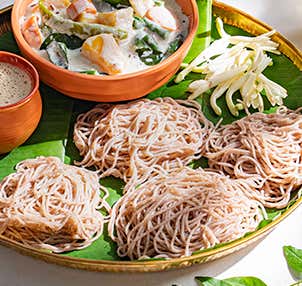
Kerala Idiyappam
 11 mins
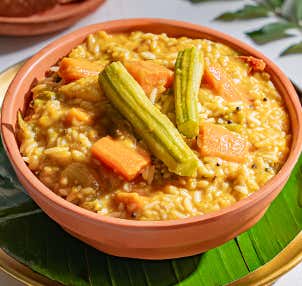
Sambar Rice
 12 mins
Kanchipuram Idli
Product You May Like to Buy

Looks like you’re new here!
Let’s start by getting to know you better
Continue with this email or use a different one?