Rabdi Malpua

Crisp edges meet creamy decadence

  • Prep Time Prep Time 60 min
  • Cook Time Cook Time 5 min
  • Servings Serving Size 4
  • Recipe Type Recipe Type Hob

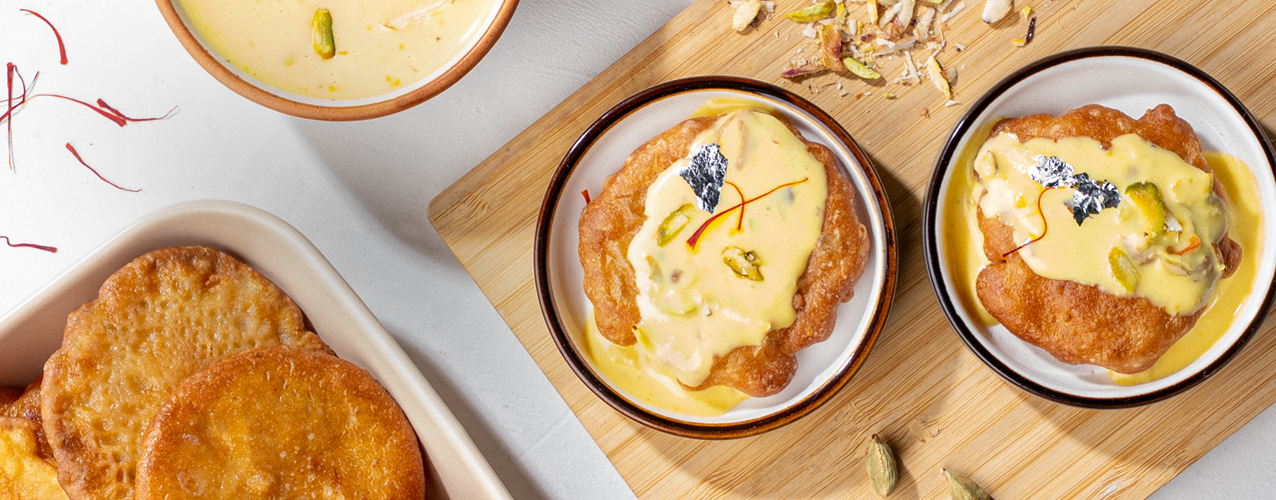
Rabdi Malpua is a dessert where simplicity transforms into luxury. Golden malpuas, crisp at the edges yet soft at the center, are prepared from a delicately spiced batter and fried in pure ghee. These are then paired with rabdi, a luscious reduction of milk flavored with saffron, cardamom, and sugar, enriched further with nuts. What makes the dish extraordinary is the interplay of temperatures—warm malpuas soaking up chilled, creamy rabdi. Rooted in tradition and often served at festive gatherings, Rabdi Malpua is more than just a sweet—it’s a celebration on a plate.

Ingredients

       For Malpua Batter:


  • 1 cup Maida (all-purpose flour)
  • 2 tbsp Sooji (semolina)
  • ¾ cup Milk (adjust to make a smooth batter)
  • ½ tsp Fennel seeds (lightly crushed)
  • ½ tsp Cardamom powder
  • 1 tbsp Sugar
  • ¼ tsp Baking powder (optional, for softness)
  • Ghee / Oil for shallow frying


        For Rabdi (Quick Version):


  • 1 litre Full cream milk
  • ¼ cup Condensed milk (for quick richness & sweetness)
  • 2 tbsp Sugar (adjust to taste)
  • ½ tsp Cardamom powder
  • a few strands of Saffron –soaked in warm milk
  • 2 tbsp Chopped nuts (almonds, pistachios)


       For Garnish:


  • Silver vark
  • Chopped nuts

Method

  • Boil full cream milk in a heavy pan. Stir continuously till it reduces to half for around 30 mins.
  • Add condensed milk, sugar, saffron and cardamom powder.
  • Simmer for 5 minutes until slightly thick.
  • Mix in chopped nuts and set aside to cool (chilled rabdi tastes best with warm malpuas).
  • In a bowl, mix maida, sooji, sugar, fennel, cardamom, and baking powder.
  • Add milk gradually to form a smooth, pourable batter (like pancake batter).
  • Rest the batter for 25 minutes.
  • Heat ghee in a shallow pan.
  • Pour a ladle of batter; into the ghee. You can fry multiple at a time.
  • Fry on medium heat for 5 mins or until golden brown on both sides.
  • Remove and place on absorbent paper.
  • Place hot malpuas on a plate; pour chilled rabdi generously over them.
  • Garnish with nuts & silver vark.
Facts Image

Did you know?

One glass of milk holds centuries of history . From early farmers discovering its healing power, to Bengal’s Portuguese-inspired chana , to Kurien’s milk cooperatives that reshaped India . Cow, buffalo, goat, or even camel —every drop tells a story of tradition, culture, and resilience. A revolution in a glass!

Find out more about the history and tradition of the dish

In India, ragi has been found in archaeological excavations dating back to 1800 BC, and has been associated with honouring poets with a concoction of ragi, milk, and honey.

Read
Regional Table

Rate This Recipe

Overall Rating

Rating star icon 0 (1)

Select your rating

success-icon

Thanks for your rating!

error-icon

Something went wrong. Please try again!

You’re reviewing

Rabdi Malpua

Rabdi Malpua

Rate your experience!

Tell us more

Similar Recipes

Shrikhand
Cooking time icon 30 mins
Rating star icon

0 (0)

Shrikhand

Take the humble dahi (curd), hang it till all the whey drains away, mix in sugar and elaichi (cardamom) powder and kesar (saffron), and behold, rich and luxurious Shrikhand is ready. The Historical Dictionary of Indian Food by KT Achaya says that the earliest record of shrikhand was in 500 BCE in Gujarat, though Maharashtrians claim this creamy sweet treat was their creation. Aromatic saffron and a touch of sweetness from sugar, topped with nuts and rose petals, make for a visually delightful dessert that’s even more delicious on the taste buds. Like all good things, be sure to wipe it clean off the plate with puri, roti, or finger, as the day may direct.
Paneer Kalakand
Cooking time icon 15 mins
Rating star icon

0 (0)

Paneer Kalakand

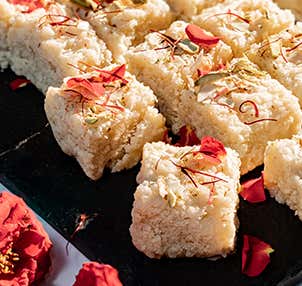
Luscious and velvety, Paneer Kalakand marries the simplicity of paneer with the richness of milk, resulting in a soft, melt-in-the-mouth experience that is truly unparalleled. The origins of Kalakand trace back to 1947, credited to the renowned confectionery Baba Thakur Das & Sons in Alwar, Rajasthan. After the partition of India, Das migrated from Pakistan to Alwar, where he introduced and popularised this delectable sweet. The essence of Paneer Kalakand lies in its minimalistic approach, relying on just a handful of ingredients to weave its magic. It’s often prepared during festivals, special occasions, and moments of joy – the rich, creamy taste makes it a favourite among both novices and seasoned cooks.
Kaju Katli
Cooking time icon 7 mins
Rating star icon

0 (0)

Kaju Katli

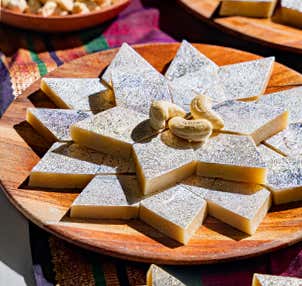
Kaju Katli is elegance and simplicity wrapped in a silver-leafed, diamond-shaped delight. The journey of this beloved confection, with its smooth, velvety texture and rich, nutty flavour, begins with grinding cashew nuts into a fine powder, which is then cooked with sugar syrup until it forms a thick, smooth paste, stirred continuously to prevent lumps and achieve the perfect consistency. Despite its simplicity, Kaju Katli carries the aura of luxury, often gracing the tables of weddings, festivals, and special occasions and appealing to everyone from young children to the elderly. Kaju Katli is relatively light, which makes it a preferred choice for those who enjoy subtler sweets.
Gajar Ka Halwa
Cooking time icon 45 mins
Rating star icon

0 (0)

Gajar Ka Halwa

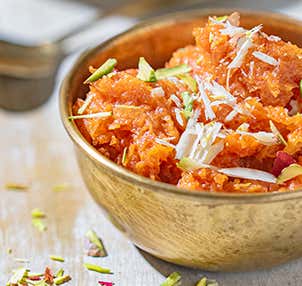
The origins of Gajar Ka Halwa offer a fascinating glimpse into culinary history. It is thought that the journey of this beloved dessert began in 1526 during the Mughal era. Originating from Afghanistan, vibrant carrots found their way to Indian soil via Dutch traders, eventually taking root in Punjab, where they thrived. In this region, the concept of cooking orange carrots with milk, sugar, ghee and khoya (a type of milk solid) came to fruition, giving birth to the rich, sweet concoction we know today as carrot halwa. Later, the dessert was enhanced with the infusion of cardamom and a lavish sprinkling of nuts and raisins. The dish’s vibrant orange hue, reminiscent of Indian festivities, and its comforting warmth make it particularly popular during the cooler months as a sweet reminder of the bounty of winter harvests.

Product You May Like to Buy