Podo Pitha

Steamed, spiced, and steeped in tradition

  • Prep Time Prep Time 30 min
  • Cook Time Cook Time 30 min
  • Servings Serving Size 6
  • Recipe Type Recipe Type Hob

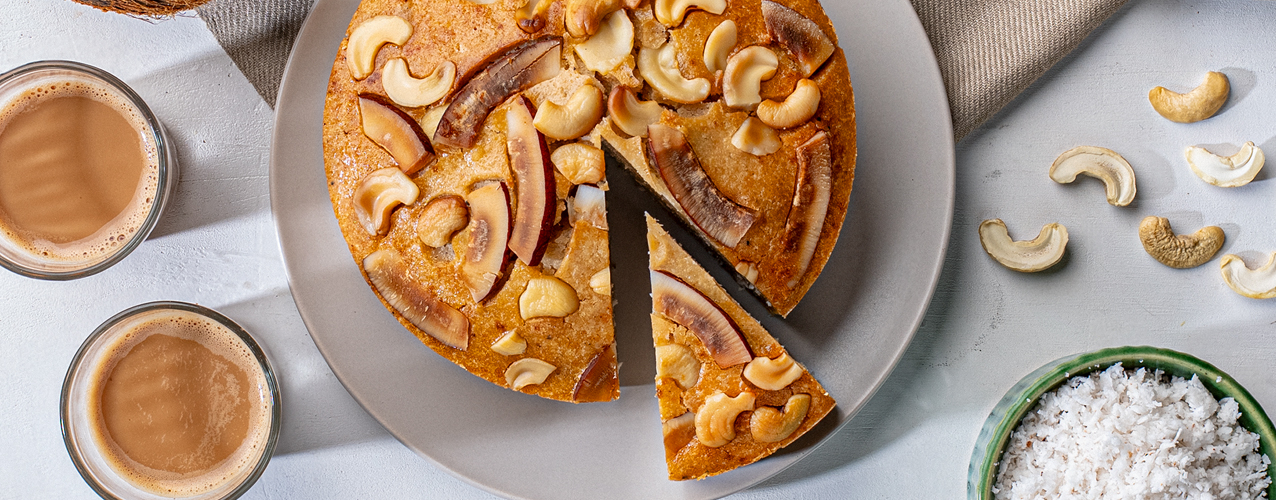
Podo Pitha is a festive rice cake from Odisha, steamed gently to a golden crust and packed with textures and flavors. Made from a fermented rice and dal batter, it’s enriched with jaggery, roasted coconut, chhena (fresh paneer), and crunchy cashew nuts. Cardamom and a hint of black pepper lend warmth and depth. Traditionally prepared during Raja Parba—a celebration of womanhood and the earth—it’s a delicacy that blends ritual, memory, and taste. Coconut, often called the “tree of life,” shines here both in its rich flavor and symbolic presence, bringing sweetness and heritage to every bite.

Ingredients

  • 2 cups rice
  • 1 cup urad dal
  • 3/4 cup jaggery powder
  • 50 g chena
  • 1/2 cup grated coconut
  • 1 tsp cardamom powder
  • 1/2 tsp black pepper powder
  • 1/4 tsp salt to taste
  • 4 tbsp ghee
  • 30g cashew nuts
  • 30g sliced coconut

Method

  • Wash and soak rice and dal separately for 8 hrs, add separately to a blender and adding very little water, blend this to a smooth to a batter.
  • In a pan heat 1 tsp ghee and roast sliced coconut and cashew nuts, set aside.
  • In the same pan add jaggery powder and stir well to form a liquid consistency, add chena and grated coconut and mix well, once dry, set aside.
  • Mix the rice and dal batter together and whisk till smooth for about 10 mins. Keep it covered for 30 mins.
  • Add jaggery & chena mixture with some of the roasted cashew nuts, sliced coconut, cardamom powder, black pepper powder, salt and whisk the batter well.
  • Grease a 6-inch cake tin with ghee, add the batter, garnish with the rest of the cashew nuts and sliced coconut.
  • Spread salt on the base of a pressure cooker and rest the cake tin on a ring to ensure even heating.
  • Close the pressure cooker lid without the whistle and bake on a mid flame for 35 mins.
  • Set aside pressure cooker lid, check the doneness with a tooth pick in center and then cool completely before de-moulding. Cut and serve at room temperature.
Facts Image

Did you know?

Did you know coconut is called kalpavriksha—the divine tree of life? It’s sacred, traded, and stirred into almost every Indian kitchen’s magic. From Kerala to Goa, its legacy runs deep—rituals, exports, sweets, and spice.

Find out more about the history and tradition of the dish

In India, ragi has been found in archaeological excavations dating back to 1800 BC, and has been associated with honouring poets with a concoction of ragi, milk, and honey.

Read
Regional Table

Rate This Recipe

Overall Rating

Rating star icon 0 (0)

Select your rating

success-icon

Thanks for your rating!

error-icon

Something went wrong. Please try again!

You’re reviewing

Podo Pitha

Podo Pitha

Rate your experience!

Tell us more

Similar Recipes

Holle
Cooking time icon 15 mins
Rating star icon

0 (0)

Holle

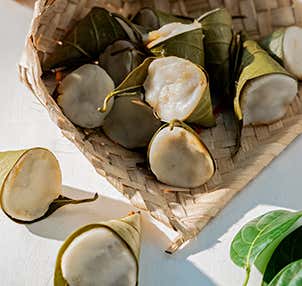
Holle, a well-loved Goan dessert, marries the ritualistic and agricultural essence of Goa, spotlighting rice and coconut as symbols of prosperity. Integral to San Joao festivities, this dessert is more than a treat; it celebrates the monsoon’s arrival, embodying the community’s jubilance. Crafted from a base of freshly ground rice flour and a fragrant filling of jaggery, coconut, split chickpeas, and cardamom, holle is steamed in jackfruit leaf cones, a testament to Goan ingenuity. This process, deeply rooted in tradition, involves communal early morning rice grinding and singing, linking generations.
Sukhdi
Cooking time icon 8 mins
Rating star icon

0 (0)

Sukhdi

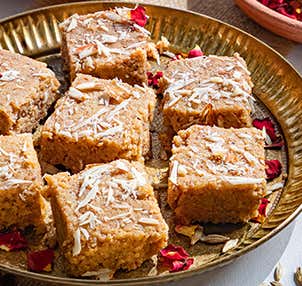
Sukhdi is yet another example of Gujarati masters transforming the ordinary into the exquisite. A cherished, traditional sweet, it is known for simple yet rich flavours bursting forth from just three ingredients — whole wheat flour, jaggery, and ghee. Roasting the flour in ghee turns it golden brown and releases a nutty aroma, before adding jaggery to form a cohesive mass. Sukhdi’s melt-in-the-mouth texture makes it a favourite nutritious snack for growing children, rich in essential vitamins, minerals, and healthy fats. Also known as gorpapdi, it is sometimes served as a prasad at temples.
Modak
Cooking time icon 35 mins
Rating star icon

0 (0)

Modak

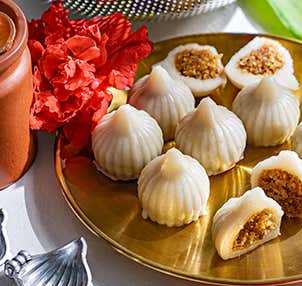
The Maharashtrian delicacy, Ukdiche Modak, is central to celebrating Ganesh Chaturthi as Lord Ganesha’s favourite sweetmeat. Legend says that Anusuya, an ancient saint’s wife, invited Lord Shiva, Goddess Parvati, and Lord Ganesha to her house to seek their blessings. Different kinds of food could not satisfy Lord Ganesha until Anusuya served him a modak. His stomach was full, and he burped, just as Lord Shiva burped 21 times. This led to the practice of preparing 21 modaks as an offering to Lord Ganesh. These steamed dumplings are made with rice flour dough, filled with a luscious mixture of grated coconut and jaggery, and infused with aromatic cardamom.
Steamed Goan Patoli
Cooking time icon 25 mins
Rating star icon

0 (0)

Steamed Goan Patoli

Steamed Goan Patodi is a saccharine cake made from rice flour. It is filled with grated coconut, sweetened with jaggery, and delicately spiced with cardamom. The dough and filling are then steamed in turmeric leaves, which gives this sweet its characteristic fragrance. Patodi holds a special place in Goan servings during festive occasions and family gatherings. It is particularly popular during the auspicious month of Shravan and is prepared for Ganesh Chaturthi celebrations. Patodi is also a part of the festivities of Feast of Assumption, which coincides with Independence Day.

Product You May Like to Buy