


 Facebook
 X
X
 WhatsApp
 Email
Email
-
 40 min
-
 30 min
-
 4
4
-

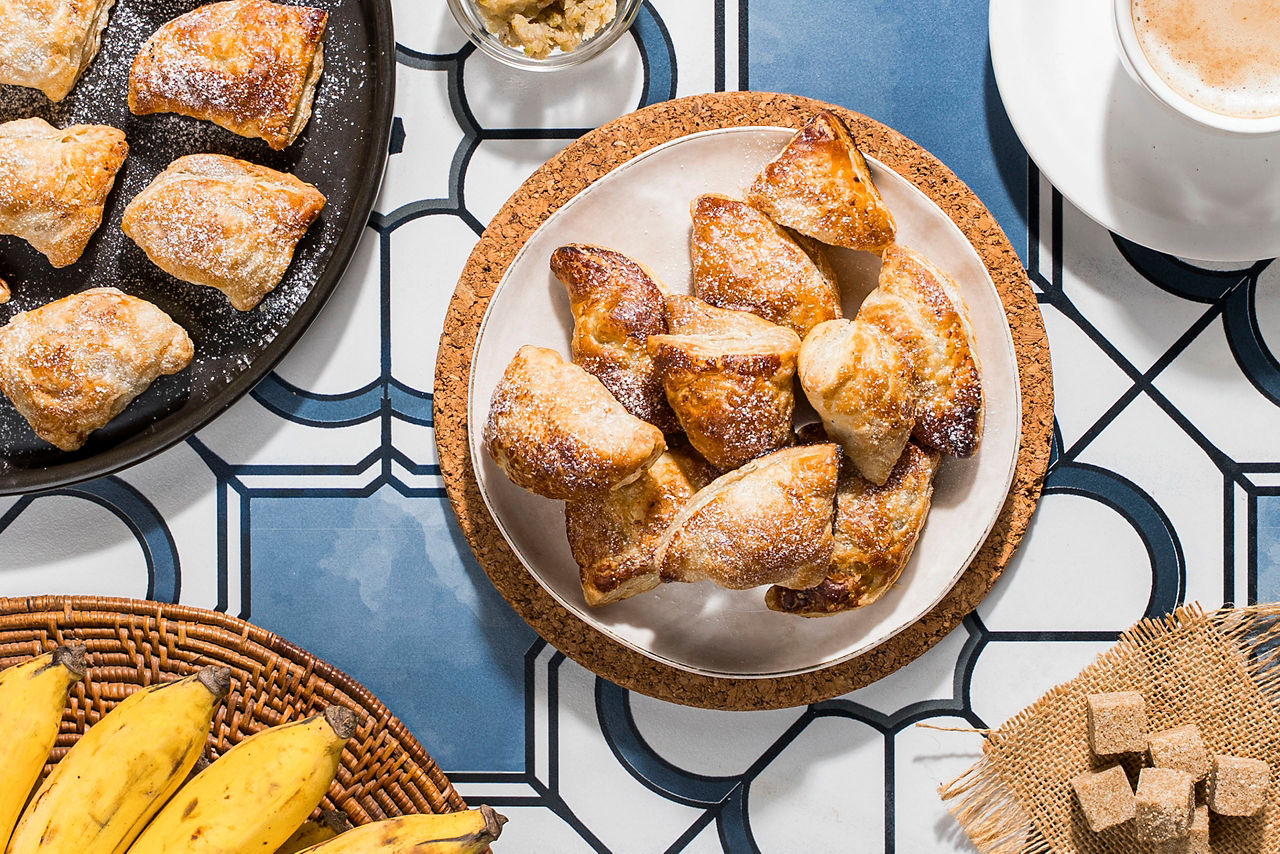
Pastéis de Fígada is a Luso-Goan pastry where a crisp Portuguese-style shell is filled with sweetened ripe banana instead of custard. While the form comes from Portuguese baking traditions, the filling reflects Goa’s local pantry, where bananas were familiar long before dairy-based sweets took hold. Baked until golden and softly set, this pastry is a quiet example of how foreign techniques were reshaped to feel at home in Goan kitchens.
Ingredients
- For the filling
- Bananas – 2 ripe
- Unsalted butter – 1 tablespoon
- Fresh coconut scrapings – ⅓ cup
- Cashew nuts – ¾ cups
- Granulated sugar – 1 tablespoon
- Green cardamom pods – 4to5
- Salt – ⅛ teaspoon
- For the pastry
- Self-raising flour – 1 cup
- Salt – ⅛ teaspoon
- Unsalted butter (cold) – 2 tablespoon
- Ice cold water – 3 to 4 tablespoon
- Unsalted butter (for greasing the tray) – 1 teaspoon
- Milk – 3 to 4 tablespoons
Method
- Chop the cashew nuts into small pieces and toast them on a medium flame in a small pan. Stir the nuts gently until they turn golden brown on all the sides. Set aside.
- Grind the cardamom seeds in a tablespoon of sugar.
- Melt a tablespoon of butter in a wide non-stick pan. When the butter has melted, add the fresh coconut scrapings. Saute the coconut on medium flame, stirring often, until it turns light brown and fragrant.
- Chop the ripe bananas into small pieces and add it to the sauted coconut scrapings. Cook the banana-coconut mixture on low flame until the liquid evaporates and the mixture pulls away easily from the sides of the pan.
- Add the toasted cashew nuts, cardamom powder, and salt to the mixture. Stir well and cook for another 2 minutes. Take the pan off the heat and allow the filling to cool.
For the pastry:
- In a large bowl, whisk together the self-raising flour and salt.
- Using your fingertips, rub the cold butter into the flour until the mixture resembles breadcrumbs.
- Add in the ice-cold water, a few tablespoons at a time and bring the pastry dough together. Do not overwork the dough at this stage.
- Cover the ball of pastry dough with a moist tissue, or tea towel and allow to rest for 15 minutes.
- Preheat the oven to 375 F/170 C
- Spread a teaspoon of butter on a baking tray lined with aluminium foil.
- Divide the pastry dough into 12 small balls. Dust your work surface and rolling pin with some flour. Roll each ball of dough into a circle (about 4 inches in diameter)
- Place a tablespoon of the banana filling into one half of the circle. Moisten the edges of the circle with a few drops of water and fold the other half over, creating a crescent shape. Pinch the edges of the dough well to seal in the banana filling.
- Place the shapes pastel on the lined baking tray, covering it with moist tissue or a tea towel as you continue to shape the rest.
- Once all the pastels have been shaped, brush them with milk gently.
- Place the baking tray in the oven and bake the pasties for about half an hour, until they turn crisp and a lovely golden brown.
- Take the baking tray out of the oven and check for doneness. They should lift off the baking tray easily and sound hollow when tapped on the bottom.
- Serve the pasties either warm or cold. They may be stored in an airtight container in the refrigerator for 2 to 3 days.
Rate This Recipe



Similar Recipes
 13 mins
Banana Halwa

 42 mins
Pear and Cinnamon Tartlets
 8 mins
Churros
 55 mins
Bebinca de Batata
Product You May Like to Buy

Looks like you’re new here!
Let’s start by getting to know you better
Continue with this email or use a different one?