


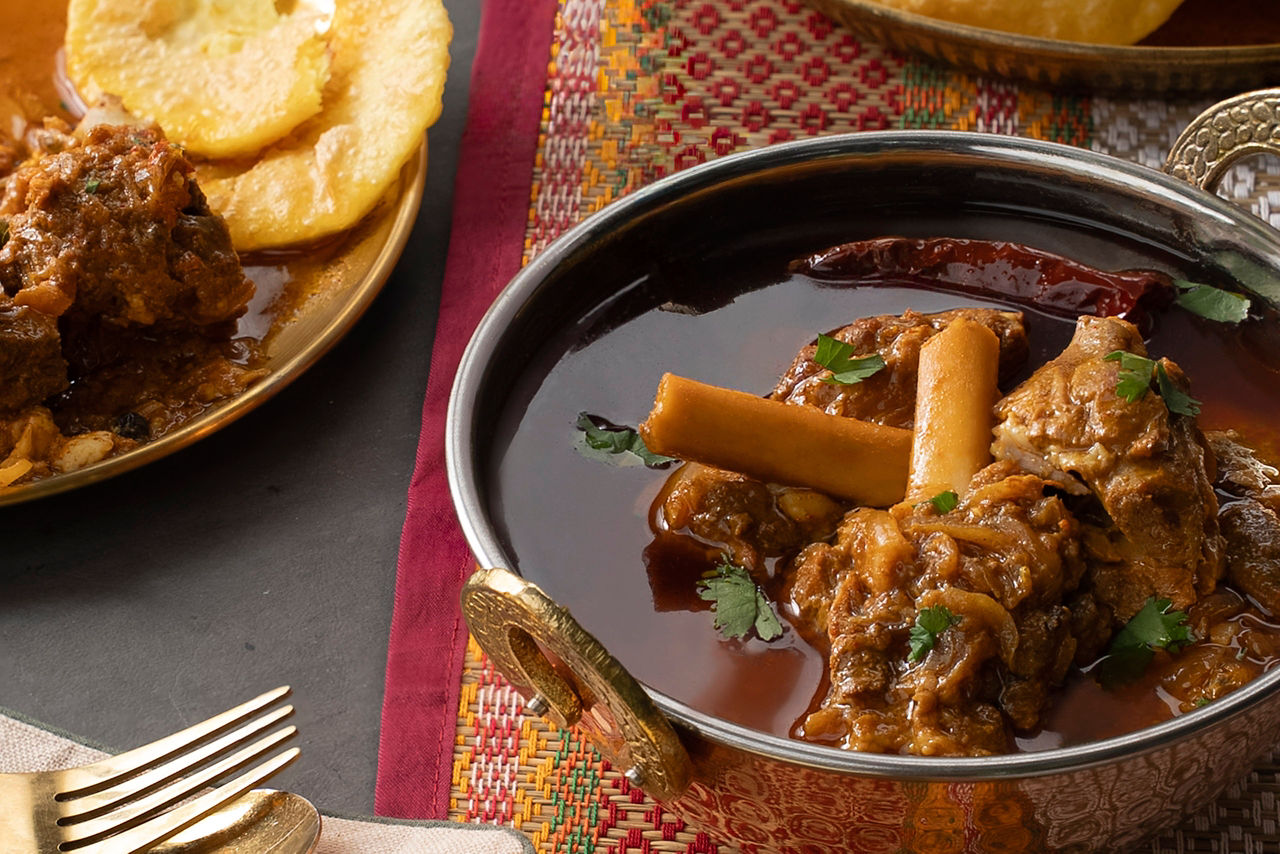
Kosha Mangsho
Slow-cooked Bengali mutton, rich with spice and time


 Facebook
 X
X
 WhatsApp
 Email
Email
-
 30 min
-
 2.5 hrs min
-
 6
6
-
 Hob
Hob
Kosha Mangsho is Bengal’s iconic mutton dish, cooked low and slow until the meat releases its own juices and the gravy turns dark, thick, and intensely fragrant. The process of koshano, patient sautéing and simmering with onions, ginger, garlic, yoghurt, and spices builds deep, layered flavour without haste. Once rooted in ritual kitchens and later popularised in Kolkata’s legendary cabin eateries, this dish is both celebratory and everyday. Bold, indulgent, and unmistakably Bengali, Kosha Mangsho is slow food at its most soulful.
Ingredients
- Mutton – 1kg
For the marinade:
- Onions — 100g
- Garlic – 5g
- Yogurt – 100g
- Salt – 15g
- Turmeric powder – 5g
- garam masala – 5g
For the curry:
- Mustard oil – 20g
- Cinnamon – 4cm
- Green cardamom – 10 pieces
- Black cardamom – 1 piece
- Cloves – 10 pieces
- Dried red chillies – 4 pieces
- Bay leaves – 6 pieces
- Onions – 400g (Sliced)
- Ginger paste – 40 g
- Garlic – 10g
- Green chillies – 40g (4 extra for garnish)
- Coriander powder – 3g
- Cumin powder – 3g
- Kashmiri red chilli – 3g
- Yogurt – 150 to 200g (based on how tart you want the curry)
- Salt – 8g
- Sugar – 10g
- Hot water – ~1l
- Ghee – 5g
Method
- For the marinade, add 100g quartered onions, 5g roughly chopped garlic, 100g yogurt, 15g salt, turmeric, and garam masala to a grinder jar. Blitz to form a smooth paste.
- Coat all the pieces with the marinade, making sure to get into all the nooks and crannies of the meat. Cover and allow the mutton to marinate in the refrigerator for about 8 hours.
- Coming to the prep: cut 400 grams of onions into thin slices. For this recipe, sliced onions define the texture of the curry. Diced, chopped, or pureed onions won’t give you the same result. Using a mortar and pestle, crush together 10g garlic and 20g green chillies to a paste. For ease, while stirring later on, you may also cut all the bay leaves in 3 cm sections using a pair of scissors.
- Heat a large kadai and add mustard oil to it. Once the oil has started to smoke slightly and changed colour to a pale yellow, add the dried red chillies, bay leaves, cinnamon, green cardamom, black cardamom, and cloves.
- Add the onions and fry them on medium flame for about 15 minutes until they are light brown in colour. Then, add the ginger paste, and garlic and green chilli paste, and fry for another 5 mins. Keep the flame medium to low, depending on whether your onions are sticking to the pan or not, and stir often. We want to fry the spices as well as develop colour on the onions. Next, add the dry spices (Coriander, cumin, and red chilli) mixed with 100g of water. Continue frying the onions along with the spices for about 15 minutes. By now (it’s been 30 mins since we started), your onions should take on a reddish-brown colour and the spices have started releasing their oils.
- Add the marinated mutton to the pan. Raise the heat and mix everything thoroughly. Fry the mutton, stirring continuously to check that it's not sticking to the pan, for 15 minutes on high heat. Beat 150-200g yogurt until it is lump free and add it into the pan. Also add 8g salt and 10g sugar at this point. Mix everything and keep frying. Once the moisture (from the cold mutton and yogurt) starts to dry out, drop the heat to medium.,/li>
- On the medium heat, for the next 75 to 90 minutes, repeat the following steps:
Add a splash of hot water to the pan (~30 ml) Stir it in - Cover the pan and cook for a minute.
Uncover and stir everything thoroughly. - Once you’re happy with the colour, add as much water as you’d like for your curry. Also, add about 4 slit green chillies for flavour. Cover and cook until the mutton is tender. You should be able to tear it apart with 2 fingers.
- Turn off the heat and top it with a little bit of ghee. Cover and let it rest for about 2 mins before serving.
Rate This Recipe



Product You May Like to Buy

Looks like you’re new here!
Let’s start by getting to know you better
Continue with this email or use a different one?