Kippur chi Roti

Kippur chi Roti

Crisp layers kissed with cardamom sweetness

  • Recipe Type Recipe Type Hob

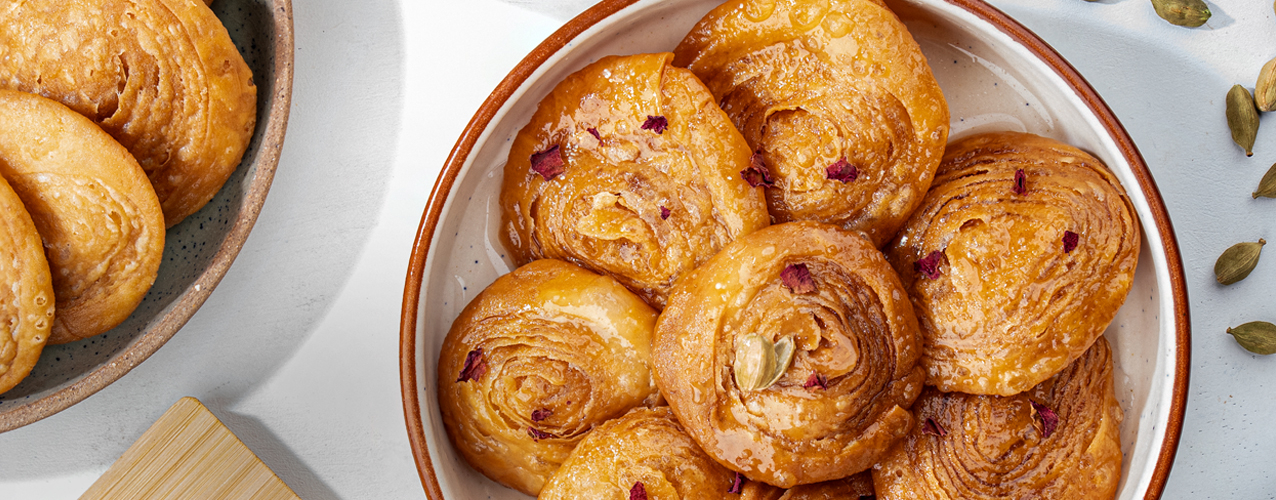
Kippur Chi Roti, also known as Chirote, is a festive Bene Israel delicacy that brings together tradition and indulgence. Layers of maida and ghee are rolled, cut, and deep-fried to create delicate, flaky discs that soak up a fragrant cardamom sugar syrup. Each bite offers a crisp exterior that melts into syrupy sweetness, making it a special treat prepared during Yom Kippur. Beyond its irresistible texture and taste, Kippur Chi Roti embodies the culinary bridge between the Jewish and Marathi-Konkani worlds — a dessert that carries stories of migration, memory, and celebration.

Ingredients

      For dough:


  • 1 cup maida
  • 2 tbsp ghee
  • ½ cup cold water
  • A pinch of salt
  • Oil to deep fry


        For paste:


  • 2 tbsp maida
  • 2 tbsp ghee


        For the sugar syrup:


  • ¾ cup sugar
  • ⅓ cup water
  • ⅓ spoon crushed cardamom

Method

  • Mix maida, ghee and salt to crumble the mix. Add water little by little to make a soft dough.
  • Let the dough rest for about 10 minutes.
  • In the meantime, prepare a paste of maida and ghee.
  • Divide the dough into two equal portions.
  • Start rolling the first portion to a circular disc of approximately 8×12 inches.
  • Smear the paste of maida and ghee all over this.
  • Roll over the second portion to a circular disc of the same size.
  • Place the second rolled disc over the first and smear the remaining maida and ghee paste.
  • Roll the discs, placed one over the other, into a log, as tightly as possible and refrigerate for 3-4 hours.
  • Cut the log of dough into tiny discs of half an inch size.
  • Press each tiny disc and roll it further with the rolling pin.
  • In moderately hot oil in a wide mouthed frying pan, deep fry them.
  • It takes 4 minutes roughly for a batch of five rotis to be fried. They need to turn golden brown. Turn them from side to side.
  • After all the rotis are fried, make the sugar syrup.
  • Heat sugar, water, and crushed cardamom together.
  • Let the sugar dissolve and begin to boil. Let it boil in slow heat for a minute.
  • Turn the flame off, and add the fried rotis into the sugar syrup. Let them be soaked for 30 minutes before serving.

Find out more about the history and tradition of the dish

In India, ragi has been found in archaeological excavations dating back to 1800 BC, and has been associated with honouring poets with a concoction of ragi, milk, and honey.

Read
Regional Table

Rate This Recipe

Overall Rating

Rating star icon 0 (0)

Select your rating

success-icon

Thanks for your rating!

error-icon

Something went wrong. Please try again!

You’re reviewing

Kippur chi Roti

Kippur chi Roti

Rate your experience!

Tell us more

Similar Recipes

Jalebi
Cooking time icon 10 mins
Rating star icon

0 (0)

Jalebi

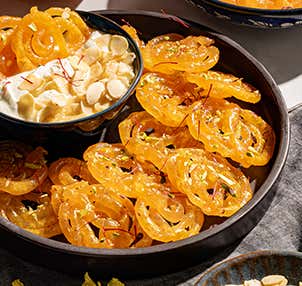
Jalebi is the king of Indian sweets, with its vibrant swirls and crystalline glaze. Interestingly, its history is as rich and complex as its flavour, originating from ancient Persia, where it was known as “zulbiya”. Jalebi made its way to the Indian subcontinent with the advent of Persian traders and invaders, gradually becoming an inseparable part of Indian culinary heritage. The fermented batter is made of all-purpose flour and besan, and the spiral-shaped sweet is fried to golden perfection and finally soaked in a fragrant saffron-infused sugar syrup. A crispy exterior gives way to a succulently sweet interior and has captured the hearts of sweet lovers across generations.
Modak
Cooking time icon 35 mins
Rating star icon

0 (0)

Modak

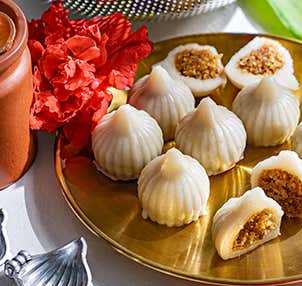
The Maharashtrian delicacy, Ukdiche Modak, is central to celebrating Ganesh Chaturthi as Lord Ganesha’s favourite sweetmeat. Legend says that Anusuya, an ancient saint’s wife, invited Lord Shiva, Goddess Parvati, and Lord Ganesha to her house to seek their blessings. Different kinds of food could not satisfy Lord Ganesha until Anusuya served him a modak. His stomach was full, and he burped, just as Lord Shiva burped 21 times. This led to the practice of preparing 21 modaks as an offering to Lord Ganesh. These steamed dumplings are made with rice flour dough, filled with a luscious mixture of grated coconut and jaggery, and infused with aromatic cardamom.
Popatjee
Cooking time icon mins
Rating star icon

0 (0)

Popatjee

Popatjee, a Parsi festive delicacy, brings together semolina, toddy, and gentle notes of nutmeg in a batter that’s fried to golden perfection. Each piece, crisp on the outside and tender within, is dipped in aromatic sugar syrup for a rich, melt-in-the-mouth sweetness. Traditionally prepared during Muktad, this sweet bread carries echoes of Dutch poffertjes and Persian kitchens—culinary influences absorbed through centuries of trade on India’s western coast. Once made in brass pans, today it’s recreated in appe moulds, keeping alive a timeless ritual of indulgence, warmth, and community celebration.
Bhokachi Wade & East Indian Chicken Curry
Cooking time icon mins
Rating star icon

0 (0)

Bhokachi Wade & East Indian Chicken Curry

Bhokachi Wades are golden, deep-fried breads born from the coastal kitchens of Bombay’s native Catholics. Made with a batter of urad dal and rice, the secret to their signature flavor lies in fermentation with toddy—palm sap that lends a subtle tang and airy texture. Once shaped and fried to perfection, these crisp-edged, fluffy-centered wades are best served hot with East Indian Chicken Khudi Curry. Traditionally prepared for weddings and feasts, they carry centuries of culinary adaptation and celebration in each bite, echoing a time when toddy was the soul of every festive kitchen.