


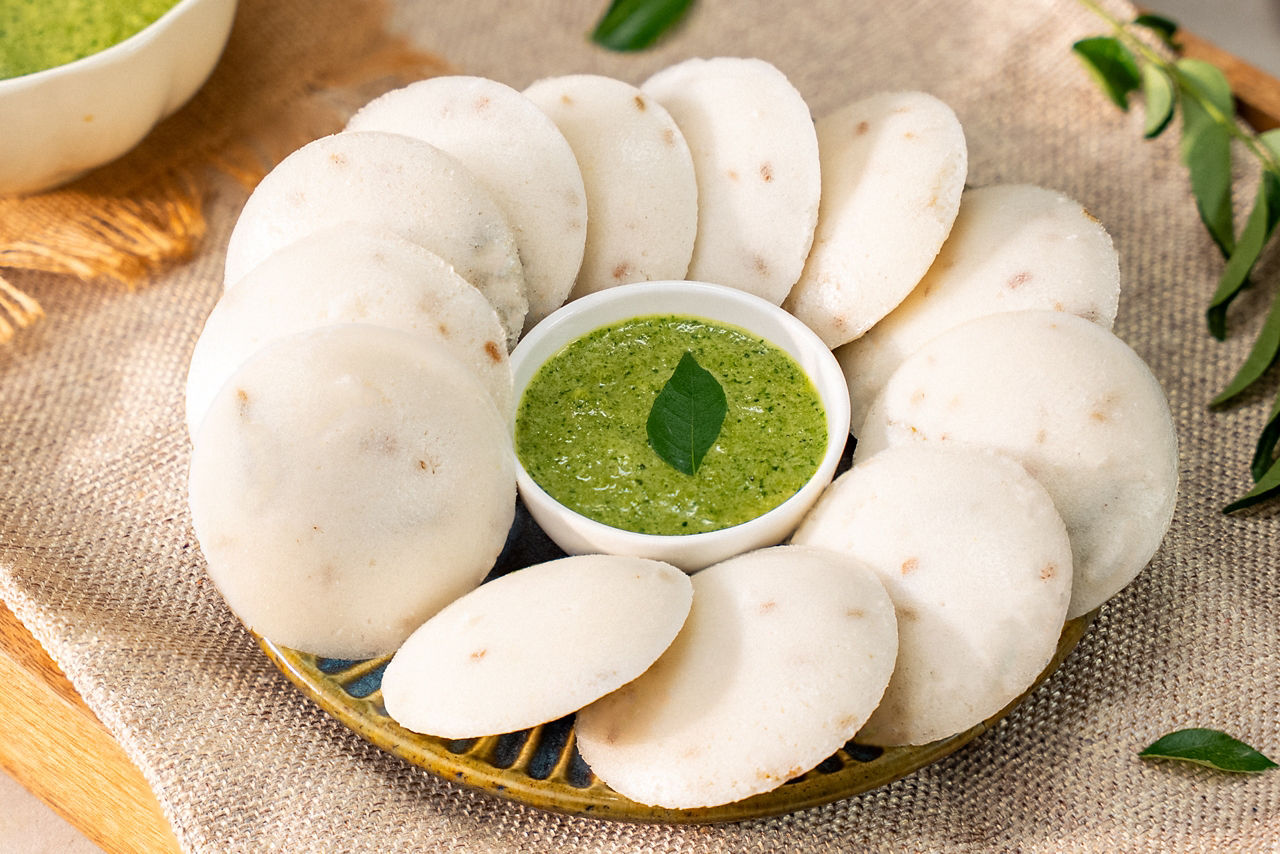
Kanchipuram Idli
A fragrant South Indian breakfast classic


 Facebook
 X
X
 WhatsApp
 Email
Email
-
 10 min
-
 12 min
-
 4
4
-
 Steam Oven
Kanchipuram Idlis offer a delightful variation of the traditional idli, combining soft, pillowy texture with a distinctive medley of spices. The fermented batter is enriched with a fragrant tempering of ghee, cumin, black pepper, dry ginger, curry leaves, and crunchy cashews before being gently steamed to perfection. The result is an idli that is wonderfully aromatic, light, and deeply satisfying. Served warm with coconut chutney or sambar, this temple-inspired delicacy brings together simplicity, flavour, and centuries of South Indian culinary heritage in every bite.
Ingredients
- 1 cup raw rice (sona masuri or any short-grain rice)
- 1 cup idli rice
- 1 cup split urad dal (husked black gram)
- 1/2 cup thick poha (flattened rice)
- 1/2 cup grated coconut
- 1/2 teaspoon fenugreek seeds (methi seeds)
- 1 tablespoon black peppercorns
- 1 tablespoon cumin seeds
- 2 tablespoons ghee
- 1/4 cup cashew nuts, broken
- 1/4 teaspoon asafoetida (hing)
- 1 teaspoon dry ginger powder (sukku)
- 1 tsp Eno salt
- Salt to taste
- A few curry leaves, chopped
- Ghee or oil for greasing the idli plates
Method
- Rinse and soak the raw rice, idli rice, and fenugreek seeds together in enough water for at least 6 hours. Rinse and soak the urad dal separately in enough water for 6 hours.
- Soak the poha in enough water for about 30 minutes before grinding.
- Drain the soaked rice and fenugreek seeds, and grind them with the soaked poha to a slightly coarse batter, adding water as needed.
- Drain the soaked urad dal and grind it to a smooth and fluffy batter, adding water as required.
- Mix both batters together in a large bowl. Add salt and mix well.
- Select ferment mode & allow the batter to ferment for 90 mins and let it rise and become airy.
- Heat 2 tablespoons of ghee in a microwave safe glass bowl at 1000 W power level for 3 mins.
- Add the black peppercorns and cumin seeds, broken cashew nuts and fry until they turn golden brown for 2 mins at 1000W.
- Add the asafoetida, dry ginger powder, and chopped curry leaves continue to heat for 1 min. Mix well and remove from oven.
- Add the prepared seasoning and grated coconut to the fermented batter and mix well.
- In the mean time pre-heat the oven by selecting steam function on S1 mode for 2 mins.
- Grease the idli plates with ghee or oil.
- Finally, add the eno salt, mix and quickly pour the batter into idli mould filling each mould about 3/4th.
- Select steam function S1 mode, use the low rack position & steam the idlis for 12 minutes or until a toothpick inserted into the idlis comes out clean.
- Allow the idlis to cool for a few minutes before removing them from the moulds.
- Serve the Kanchipuram Idlis hot with coconut chutney, sambar, or any chutney of your choice.
Rate This Recipe



Similar Recipes
 15 mins
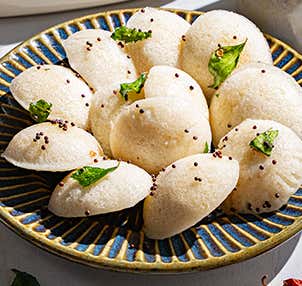
Upvas Idli

 11 mins
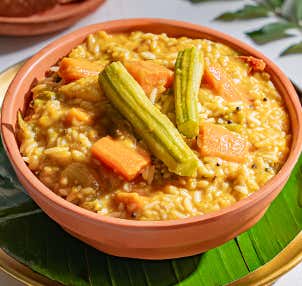
Sambar Rice
 18 mins
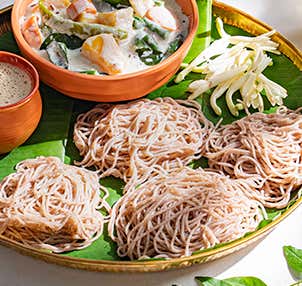
Kerala Idiyappam
 mins
mins
Dosa & Coconut Chutney
Product You May Like to Buy

Looks like you’re new here!
Let’s start by getting to know you better
Continue with this email or use a different one?