Jalebi

Jalebi

Crispy, curly, sugary delight

  • Prep Time Prep Time 45 min
  • Cook Time Cook Time 10 min
  • Servings Serving Size 4
  • Recipe Type Recipe Type Hob

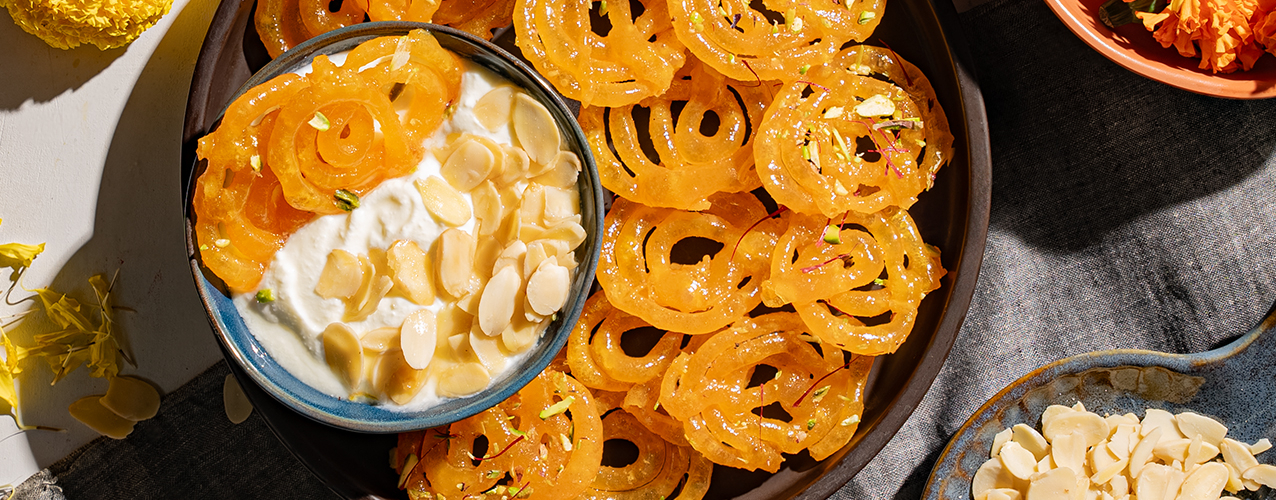
Jalebi is the king of Indian sweets, with its vibrant swirls and crystalline glaze. Interestingly, its history is as rich and complex as its flavour, originating from ancient Persia, where it was known as “zulbiya”. Jalebi made its way to the Indian subcontinent with the advent of Persian traders and invaders, gradually becoming an inseparable part of Indian culinary heritage. The fermented batter is made of all-purpose flour and besan, and the spiral-shaped sweet is fried to golden perfection and finally soaked in a fragrant saffron-infused sugar syrup. A crispy exterior gives way to a succulently sweet interior and has captured the hearts of sweet lovers across generations.

Ingredients

  • For making Jalebi Batter:
  • 125 gms All-purpose Flour                
  • 2 tbsp Gram Flour (Besan)               
  • ⅛ tsp Turmeric Powder (Haldi)         
  • 1 cup Water                                        
  • All-purpose Flour  (1-2 tbsp) to be added later after the batter has fermented
  • For Sugar Syrup:
  • 150 gms  Sugar                               
  • ½ cup Water                               
  • ¼ tsp Saffron Strands                        
  • Oil for deep frying, as required – you can also use ghee instead

Method

  • Making Batter:
  • In a mixing bowl, sift in refined flour, gram flour, a pinch of baking soda and turmeric powder.
  • Mix well with a spoon. Then add water and make lump-free batter.
  • Whisk well to add volume to the batter. The batter should have a flowing consistency. Cover and keep the batter to ferment in a warm place for 12 hours.
  • After fermentation, the batter will have tiny air pockets in it with a tangy taste. The batter will also become thinner compared to before. To thicken the batter again, add 1 to 2 tablespoons of all-purpose flour. Mix well.
  • Now, pour this batter into the squeeze bottle or piping bag.
  • For Sugar Syrup:
  • Add sugar to a pan. Add saffron strands to it. Add ½ cup of water.
  • Place the pan on the burner and dissolve the sugar on low flame. Keep stirring throughout till the sugar melts.
  • Once the sugar is one-string consistency, switch off the heat and add ¼ tsp lime or lemon juice. Stir well.
  • Keep the sugar syrup on the burner so that it remains warm when you add the jalebi to it.
  • Frying Jalebi:
  • Heat oil in a deep bottom pan for deep frying. To check the temperature, add a tiny amount of batter to the oil. If it comes up quickly and gradually, the oil is hot enough for the jalebi to be fried.
  • Now squeeze the bottle and make rings similar to a chakli. Fry till the oil stops sizzling, and the jalebis are a light golden. Remove with tongs or a bamboo skewer.
  • Adding Fried Jalebi to Sugar Syrup:
  • Make sure the sugar syrup is warm.
  • Add and keep them in the syrup for about 2 to 3 minutes.
  • Serve jalebi hot, warm or at room temperature.

Find out more about the history and tradition of the dish

In India, ragi has been found in archaeological excavations dating back to 1800 BC, and has been associated with honouring poets with a concoction of ragi, milk, and honey.

Read
Regional Table

Rate This Recipe

Overall Rating

Rating star icon 0 (0)

Select your rating

success-icon

Thanks for your rating!

error-icon

Something went wrong. Please try again!

You’re reviewing

Jalebi

Jalebi

Rate your experience!

Tell us more

Similar Recipes

Khopryachi Vadi
Cooking time icon 3 mins
Rating star icon

0 (0)

Khopryachi Vadi

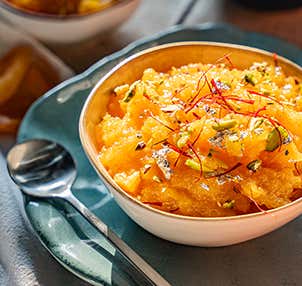
You can’t go wrong with this nutty festival staple. Born from the culinary heart of Maharashtra, where coconut palms sway and sugary delights are an art form, this mouth-watering creation brings forth the joy of simplicity. Grated coconut, toasted to golden perfection, mingles with sugar syrup and is generously adorned with a medley of mixed nuts, adding a crunchy, nutty dimension that elevates each bite to pure bliss. No need to wonder how something can be soft and crunchy and oh-so delightful all at the same time! Now you can find out for yourself.
Khubani Ka Meetha
Cooking time icon 2 mins
Rating star icon

0 (0)

Khubani Ka Meetha

This three-ingredient delight is a must-try for anyone with a sweet tooth and those without. Dried apricots (khubani in Urdu) form the heart of this regal dessert, which is believed to have come to India with Alexander’s expedition to the subcontinent. Born in the royal kitchens of Hyderabad, Khubani Ka Mitha has a floral and warming flavour complementing the tangy-sweet fruit, with milk and sugar partnering up to create this apricot-infused allure. Make this your new perfect ending to a lavish feast or a humble, quiet evening. You’ll be a hit chef every time you prepare this luscious pudding that the blue bloods of India adored.
Paneer Kalakand
Cooking time icon 15 mins
Rating star icon

0 (0)

Paneer Kalakand

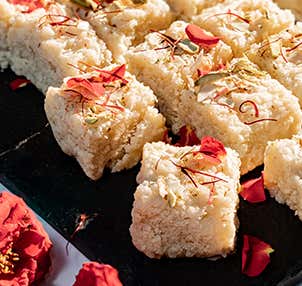
Luscious and velvety, Paneer Kalakand marries the simplicity of paneer with the richness of milk, resulting in a soft, melt-in-the-mouth experience that is truly unparalleled. The origins of Kalakand trace back to 1947, credited to the renowned confectionery Baba Thakur Das & Sons in Alwar, Rajasthan. After the partition of India, Das migrated from Pakistan to Alwar, where he introduced and popularised this delectable sweet. The essence of Paneer Kalakand lies in its minimalistic approach, relying on just a handful of ingredients to weave its magic. It’s often prepared during festivals, special occasions, and moments of joy – the rich, creamy taste makes it a favourite among both novices and seasoned cooks.
Kaju Katli
Cooking time icon 7 mins
Rating star icon

0 (0)

Kaju Katli

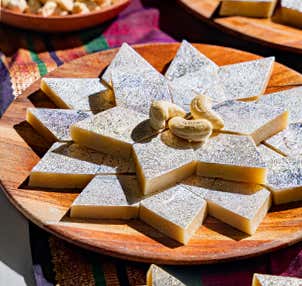
Kaju Katli is elegance and simplicity wrapped in a silver-leafed, diamond-shaped delight. The journey of this beloved confection, with its smooth, velvety texture and rich, nutty flavour, begins with grinding cashew nuts into a fine powder, which is then cooked with sugar syrup until it forms a thick, smooth paste, stirred continuously to prevent lumps and achieve the perfect consistency. Despite its simplicity, Kaju Katli carries the aura of luxury, often gracing the tables of weddings, festivals, and special occasions and appealing to everyone from young children to the elderly. Kaju Katli is relatively light, which makes it a preferred choice for those who enjoy subtler sweets.

Product You May Like to Buy