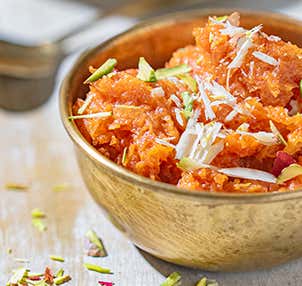
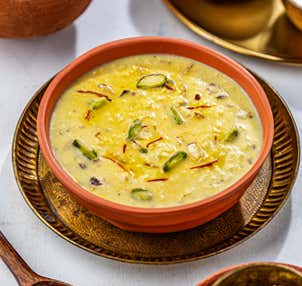
Carrot & Date Kheer

  • Prep Time Prep Time 30 min
  • Cook Time Cook Time 20 min
  • Servings Serving Size 4

Carrot and Date Kheer brings together two ancient ingredients whose journeys span continents and centuries. Carrots, once purple and prized across Asia, lend their gentle earthiness, while dates provide natural sweetness without the need for sugar. Grated carrots are slowly simmered in milk until tender, enriched with a fragrant blend of saffron and cardamom. A paste of softened dates melts into the mixture, giving the kheer its rich, caramel-like depth. Nuts and raisins add a delightful bite. Enjoy this comforting, nutrient-rich dessert warm in winter or chilled in summer—an easy, wholesome treat rooted in culinary history.

Ingredients

  • 1 litre full-fat milk
  • 2 cups grated carrots (red Delhi gajar preferred, about 3–4 medium)
  • 250 g soft seedless dates, finely chopped or blended to a paste
  • 8–10 sliced almonds
  • 8–10 chopped cashews
  • 1 tbsp raisins
  • ½ tsp cardamom powder
  • A few saffron strands, soaked in warm milk
  • 1 tbsp ghee

Method

  • Soak dates in hot milk for 15 mins then blend into a smooth paste.
  • Heat ghee in a heavy-bottom kadai. Add grated carrots, sauté 4–5 minutes till raw smell goes and they look slightly glossy.
  • Pour milk, bring to boil, then simmer on low. Cook, stirring occasionally, until carrots soften and milk reduces by 20–25% (about 15–20 mins).
  • Add chopped/mashed dates. Stir continuously for 5 minutes — dates will dissolve and naturally sweeten the kheer.
  • Add cardamom powder, saffron milk, almonds, cashews, raisins.
  • Simmer 2 more minutes, switch off flame. Serve warm in winters or chilled in summers.
  • Garnish with sliced pistachios or more dates on top.
Facts Image

Did you know?

From ancient purple roots of Afghanistan to Britain’s wartime kitchens, carrots have travelled centuries and continents! From gut-healing kali gajar kanji to carrot marmalade, this humble root has shaped cuisines and cultures alike.

Find out more about the history and tradition of the dish

In India, ragi has been found in archaeological excavations dating back to 1800 BC, and has been associated with honouring poets with a concoction of ragi, milk, and honey.

Read
Regional Table

Rate This Recipe

Overall Rating

Rating star icon 0 (0)

Select your rating

success-icon

Thanks for your rating!

error-icon

Something went wrong. Please try again!

You’re reviewing

Carrot & Date Kheer

Carrot & Date Kheer

Rate your experience!

Tell us more

Similar Recipes

Shrikhand
Cooking time icon 30 mins
Rating star icon

0 (0)

Shrikhand

Take the humble dahi (curd), hang it till all the whey drains away, mix in sugar and elaichi (cardamom) powder and kesar (saffron), and behold, rich and luxurious Shrikhand is ready. The Historical Dictionary of Indian Food by KT Achaya says that the earliest record of shrikhand was in 500 BCE in Gujarat, though Maharashtrians claim this creamy sweet treat was their creation. Aromatic saffron and a touch of sweetness from sugar, topped with nuts and rose petals, make for a visually delightful dessert that’s even more delicious on the taste buds. Like all good things, be sure to wipe it clean off the plate with puri, roti, or finger, as the day may direct.
Gajar Ka Halwa
Cooking time icon 45 mins
Rating star icon

0 (0)

Gajar Ka Halwa

The origins of Gajar Ka Halwa offer a fascinating glimpse into culinary history. It is thought that the journey of this beloved dessert began in 1526 during the Mughal era. Originating from Afghanistan, vibrant carrots found their way to Indian soil via Dutch traders, eventually taking root in Punjab, where they thrived. In this region, the concept of cooking orange carrots with milk, sugar, ghee and khoya (a type of milk solid) came to fruition, giving birth to the rich, sweet concoction we know today as carrot halwa. Later, the dessert was enhanced with the infusion of cardamom and a lavish sprinkling of nuts and raisins. The dish’s vibrant orange hue, reminiscent of Indian festivities, and its comforting warmth make it particularly popular during the cooler months as a sweet reminder of the bounty of winter harvests.
Mango Shrikhand
Cooking time icon 5 mins
Rating star icon

0 (0)

Mango Shrikhand

A delectable fusion of creamy yoghurt and luscious mangoes produces India’s beloved Mango Shrikhand. Both Gujaratis and Maharashtrians claim the invention of shrikhand. According to legend, shrikhand was invented by herders; to carry yoghurt easily while travelling overnight, they strained out its whey. However, this sweet dish is mentioned in the scripture Supa Shastra, a treatise of food and drink. Other stories say that it was first prepared by Kunti’s son, Bhimsena, who was an expert in cookery. Adding ripe, succulent mangoes to strained yoghurt to achieve a thick, velvety consistency creates an irresistible summer delight – a perfect balance of tangy and sweet flavours. Satisfying the sweet tooth and cooling the body, it’s the ideal treat to beat the heat while celebrating the king of fruits.
Chenna Payesh
Cooking time icon 13 mins
Rating star icon

0 (0)

Chenna Payesh

Mishti (sweet) is an integral member of Bengali cuisine, and Chenna Payesh is one of its many shining stars. Fresh chenna (cottage cheese) is simmered in milk, flavoured with saffron, and sweetened with jaggery. A simple garnish with a sprinkling of chopped nuts like pistachios and almonds makes Chenna Payesh a treat for the palate and a feast for the eyes. This dessert is traditionally served chilled, making it a refreshing end to any meal. It is often in demand on festivals and special occasions, its creamy, aromatic sweetness spreading joy and celebration.

Product You May Like to Buy